
Socotra Island
Yemen
$4,450
Switch CurrencyKnown as the Galápagos of the Indian Ocean, Socotra is home to unique animals and plants, unearthly landscapes and awe-inspiring vistas. The island is a living laboratory of millions of years of evolution unlike any other place on Earth.
BrochureStart Point
Thursday, January 21st, 2027
Hadibo
End Point
Thursday, February 4th, 2027
Hadibo
Homhil Natural

Wadi Shifa
Dixam Plateau

About Socotra
Socotra is unlike anywhere else on Earth.
Isolated in the Indian Ocean between Arabia and Africa, this extraordinary island has evolved a remarkable flora and fauna found nowhere else on the planet. Dragon’s blood trees form surreal forests across high plateaux, bizarre bottle trees cling to rocky slopes, while immense white sand dunes plunge towards turquoise
seas.
During this expedition, we journey across Socotra in search of its extraordinary endemic plants and wildlife, camp beneath forests of dragon’s blood trees, swim in remote canyons, explore immense caves and snorkel amongst the marine life of
the Indian Ocean.
Getting There
Fly to Jeddah, Saudi Arabia (JED), which is the principal international gateway for flights to Socotra. Jeddah is extremely well connected, with international flights from the UK, Europe, North America, Asia and other major destinations. From Jeddah, Yemenia Airways operates direct flights to Socotra Airport (SCT), with a scheduled flying time of approximately three hours. Redfern Adventures can assist with booking your flight from Jeddah to Socotra. Contact us for details.
Getting Away
At the end of the expedition, we transfer to Socotra Airport for our return flight to Jeddah, Saudi Arabia. We recommend allowing sufficient time in Jeddah before connecting with your onward international flight, as schedules to and from Socotra can occasionally change. We recommend a buffer night in Jeddah before onward flights home.
Safety & Security
Although Socotra is politically part of Yemen, the island is geographically isolated from the areas of conflict on the mainland and has a very different security environment. We travel throughout Socotra with experienced local guides and trusted local partners who know the island intimately, and we carefully monitor local conditions before and throughout every expedition. Participants should nevertheless be aware of current government travel advice and must ensure that they have appropriate specialist travel insurance.
Camping on Socotra
Much of Socotra remains wonderfully undeveloped, with no hotels across many of the remote landscapes we explore. Instead, we stay in carefully selected wilderness camps, surrounded by dragon’s blood forests, mountains, pristine beaches and spectacular coastal scenery.
Our experienced local team takes care of every aspect of camp, setting up and packing away our spacious, high-ceilinged tents each day. Comfortable mattresses, pillows, fresh sheets and clean blankets are provided, creating a comfortable retreat at the end of each day’s exploration. Evenings are a particularly special part of the Socotra experience. As darkness falls, we gather on traditional rugs for a freshly prepared dinner, often beside the fire and beneath an extraordinary canopy of stars. Yemeni tea and coffee are served as we relax together and reflect on the day.

Included
- All accommodation throughout the itinerary
- All meals and non-alcoholic drinks
- Expert expedition team and professional guides
- All activities and excursions as per the itinerary
- All ground transport and other travel logistics as per the itinerary
- All permits, permissions and entry fees
- Basic medical kit and satellite, radio or emergency phone
Not Included
- International flights to the start point and from the end point
- Travel insurance
- Passport and travel documents (e.g. visa, if required for your nationality)
- Pre- and Post-expedition accommodation
- Tips and gratuities (optional)
- Alcoholic beverages
- Souvenirs
- Personal expenses
- Optional single room upgrade
Itinerary
From sunrise amongst the dragon’s blood trees of Firmihin to the brilliant white dunes of Arher and the turquoise waters of Detwah Lagoon, this extraordinary journey reveals the very best of Socotra’s landscapes, wildlife and natural wonders.
Download Brochure


Arrival & Firmihin Forest
Leaving the coast behind, we travel towards the highlands and the remarkable Firmihin Forest, home to one of the greatest remaining concentrations of Socotra’s iconic dragon’s blood trees (Dracaena cinnabari). As we climb towards the plateau, the landscape becomes increasingly dramatic, with rugged mountains, deep valleys and strange endemic plants appearing along the route.
Arriving at Firmihin, we enter one of the most extraordinary forests on Earth. Thousands of dragon’s blood trees rise across the rocky landscape, their enormous umbrella-shaped crowns creating an almost prehistoric scene. Firmihin is widely recognised as the finest remaining dragon’s blood tree forest on Socotra.
We establish our camp amongst the trees before setting out on a sunset walk. As the light fades across the plateau, the distinctive silhouettes of the dragon’s blood trees create an unforgettable introduction to Socotra.
Overnight: Firmihin Forest.

Explore Firmihin Forest
We rise early to experience sunrise amongst the dragon’s blood trees. As the first light reaches the plateau, thousands of extraordinary umbrella-shaped crowns emerge from the surrounding landscape, providing superb opportunities for photography.
Today is dedicated to exploring Firmihin and learning about the relationship between Socotra’s people and its remarkable flora. We visit a local Bedouin community and a nursery where young dragon’s blood trees are being cultivated, an important contribution towards the conservation of this extraordinary species.
We experience traditional Socotran hospitality over tea and fragrant burning frankincense before learning how the deep-red resin known as “dragon’s blood” is traditionally harvested from the trees. This remarkable substance has been valued and traded for centuries.
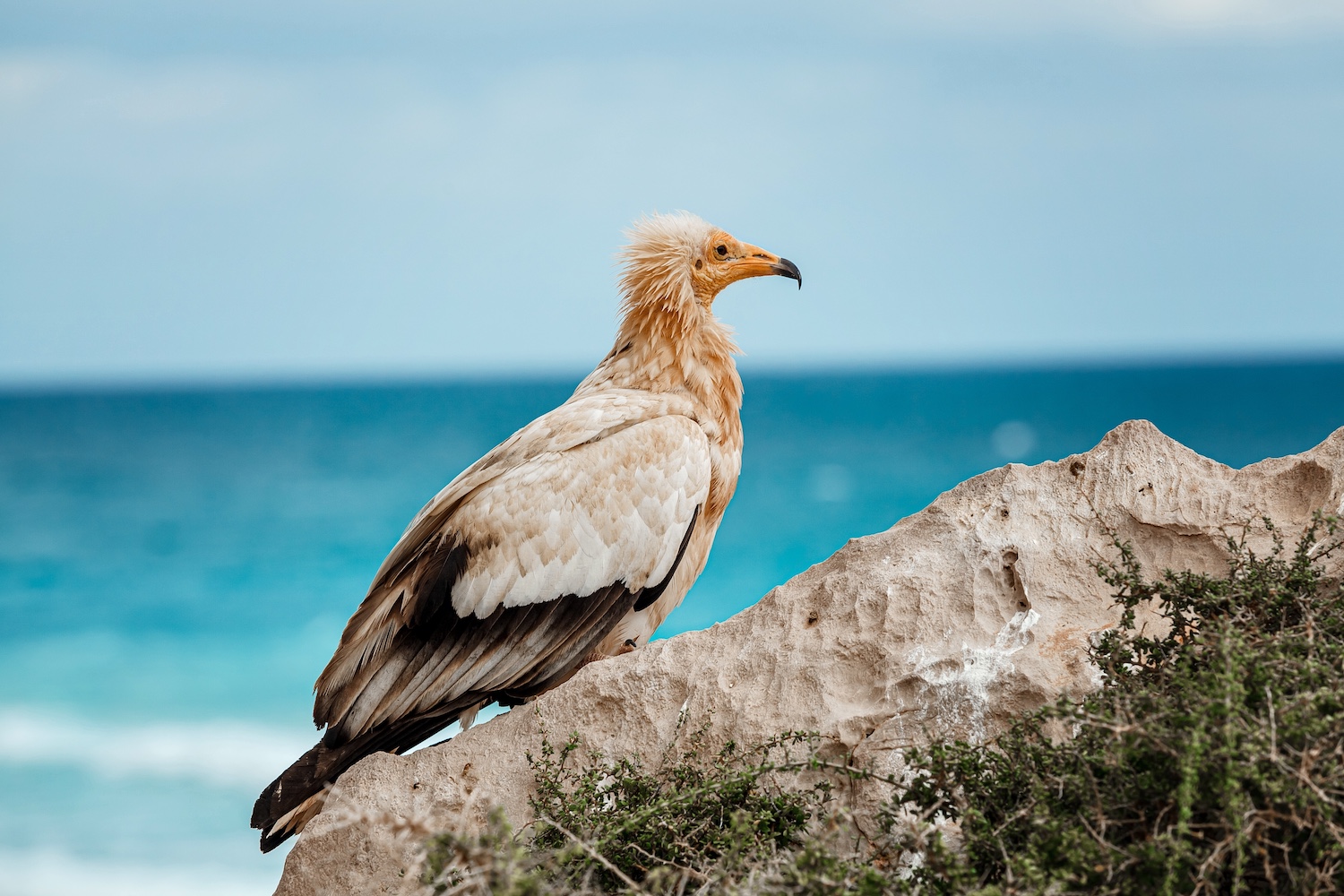
Throughout the day we explore the forest on foot, searching amongst the trees and rocky limestone terrain for endemic wildlife, including the remarkable Socotra chameleon.
As afternoon light returns to the forest, there is further time to explore and photograph this unique landscape before another night beneath the dragon’s blood trees.


Diksam, Aomak & Zaheq
After breakfast, we leave Firmihin and travel across the highlands towards Diksam, another of Socotra’s most spectacular dragon’s blood tree landscapes.
We visit a local tree nursery where young dragon’s blood trees are being grown and protected, before descending from the highlands towards Socotra’s dramatically different southern coast.
Reaching Aomak, we stop for lunch beside the beautiful beach, where an immense expanse of sand meets the waters of the Indian Ocean. We then continue to nearby Dagub Cave. Set amongst the limestone hills overlooking the southern plains, the cave contains impressive stalactites, stalagmites and other formations created by water slowly passing through the rock.
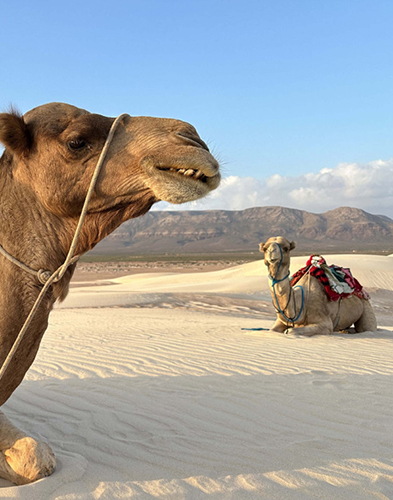
Later in the afternoon, we continue to the immense Zaheq Dunes. Here, enormous banks of pale sand have accumulated against the mountains, creating one of southern Socotra’s most spectacular landscapes. Local camel owners are often present in this area, providing the opportunity to experience and photograph camels amongst the dunes as the setting sun transforms the landscape. We establish camp amongst this extraordinary scenery for the night.
Overnight: Zaheq Dunes.
Kalisan Canyon & Arher
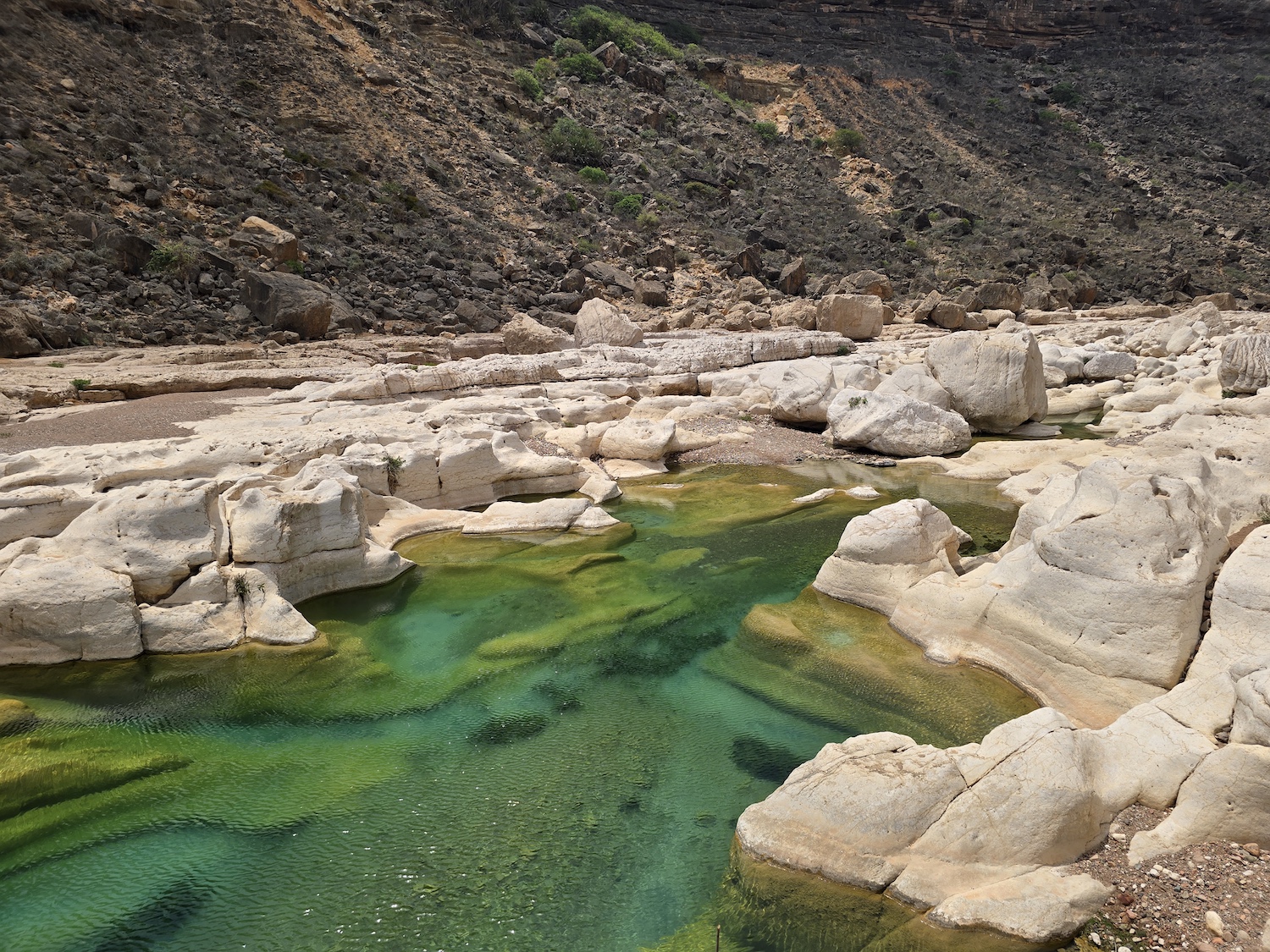
Today we journey eastwards to Kalisan Canyon, one of Socotra’s most beautiful natural landscapes. Surrounded by immense pale limestone cliffs, the canyon contains beautiful freshwater pools where we have time to swim and explore. The contrast between brilliant clear water, white rock and the surrounding arid landscape creates one of the island’s most remarkable settings.
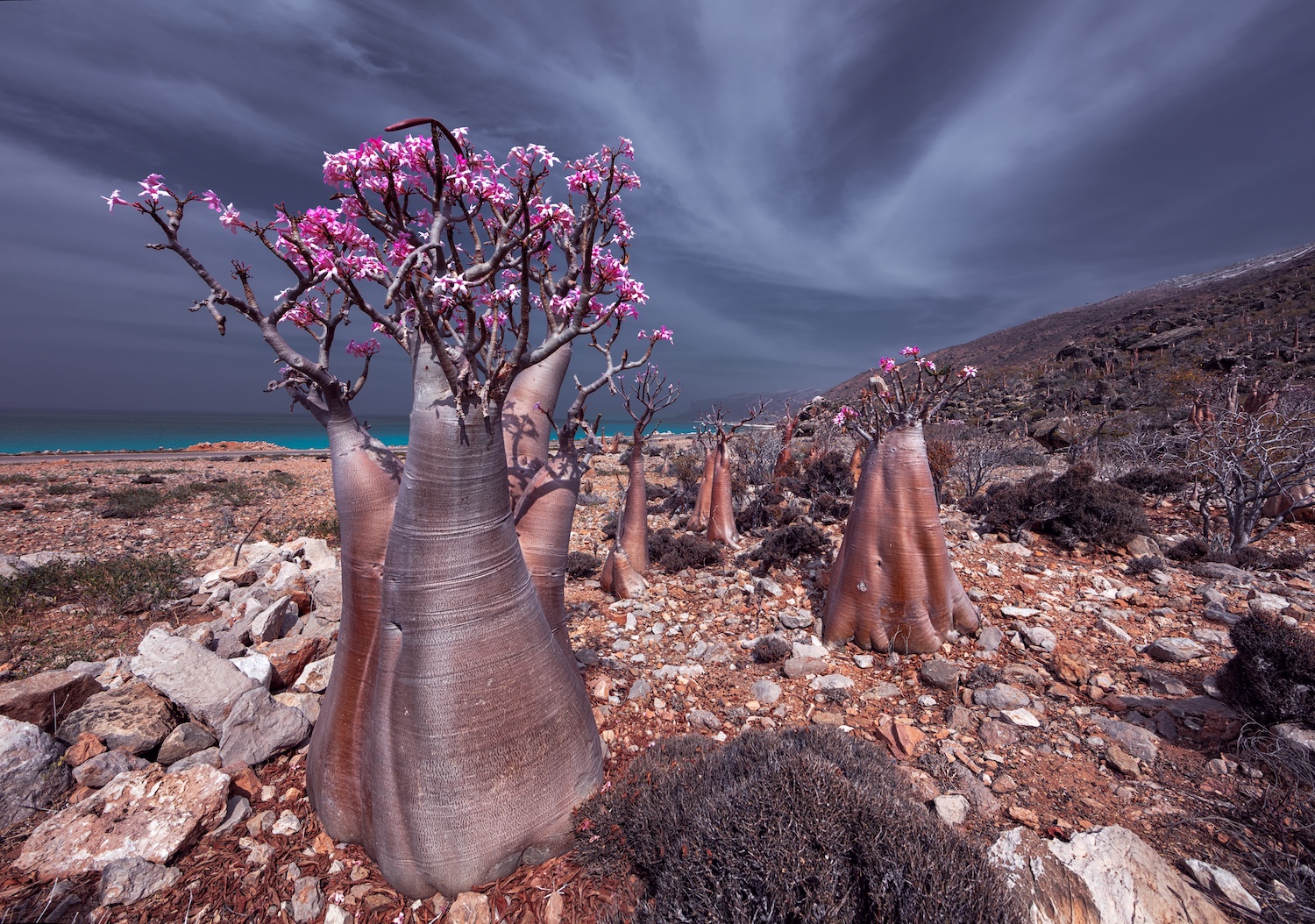
We continue exploring the surrounding area, including a remarkable forest of bottle trees. These bizarre endemic plants are among Socotra’s great botanical treasures, their swollen trunks adapted to store precious water through prolonged dry periods. We stop for lunch at a spectacular viewpoint overlooking the surrounding wilderness.
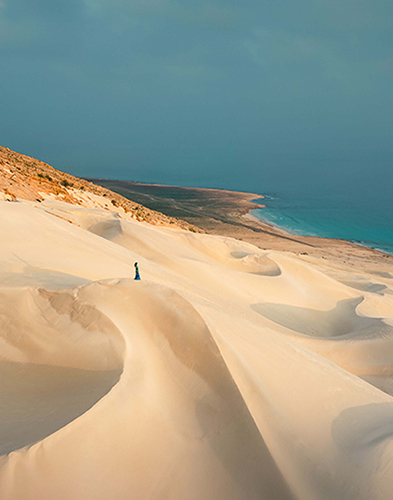
During the afternoon, we continue towards the north-east coast and Arher, where one of Socotra’s most dramatic landscapes awaits us. Here, immense white sand dunes rise directly against towering mountains beside the turquoise waters of the Arabian Sea. We establish our camp beneath the dunes with time to explore this magnificent setting before nightfall.
Overnight: Arher.
Hoq Cave & Ras Erissel
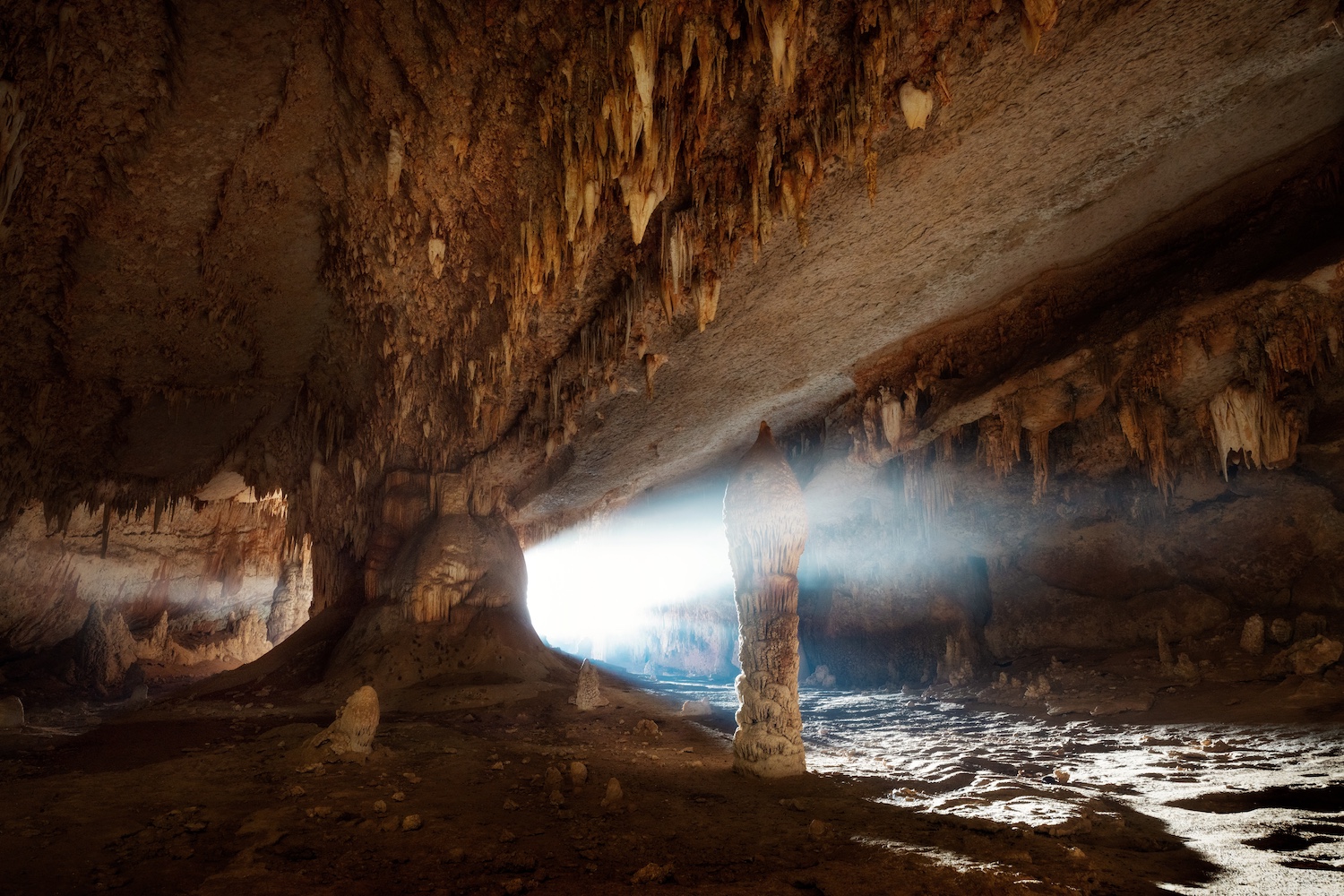
This morning we set out to explore Hoq Cave, one of Socotra’s greatest wonders.
Reaching the cave involves a hike through the island’s rugged limestone landscape before arriving at its immense entrance. Hoq extends for several kilometres beneath the mountains and contains a spectacular subterranean world of stalactites, stalagmites, flowstones and enormous chambers. Archaeological evidence and ancient inscriptions also reveal that people travelling across the Indian Ocean visited the cave many centuries ago.
After emerging from the darkness, we descend and return to the coast.
During the afternoon, we spend time exploring the extraordinary white dunes of Arher. Those wishing for a more energetic adventure can climb higher onto the dunes for spectacular views across the coast, mountains and Arabian Sea.
Later we travel to Ras Erissel, at the extreme eastern end of Socotra, where the island narrows towards a dramatic headland. Here we watch the changing evening light across the coast and enjoy sunset in one of Socotra’s most remote and beautiful settings. We then return to Arher for our second night camping beneath its immense white dunes.
Overnight: Arher.

Arher Sunrise & Homhil
We rise before dawn for one of the most spectacular experiences of the expedition: sunrise from the immense white dunes of Arher.
Those wishing to make the climb ascend the dunes in the cool early morning, reaching a high vantage point as the first light spreads across the mountains, Arabian Sea and brilliant white sands below. The scale of the landscape is extraordinary, with towering dunes rising directly from the coastline.
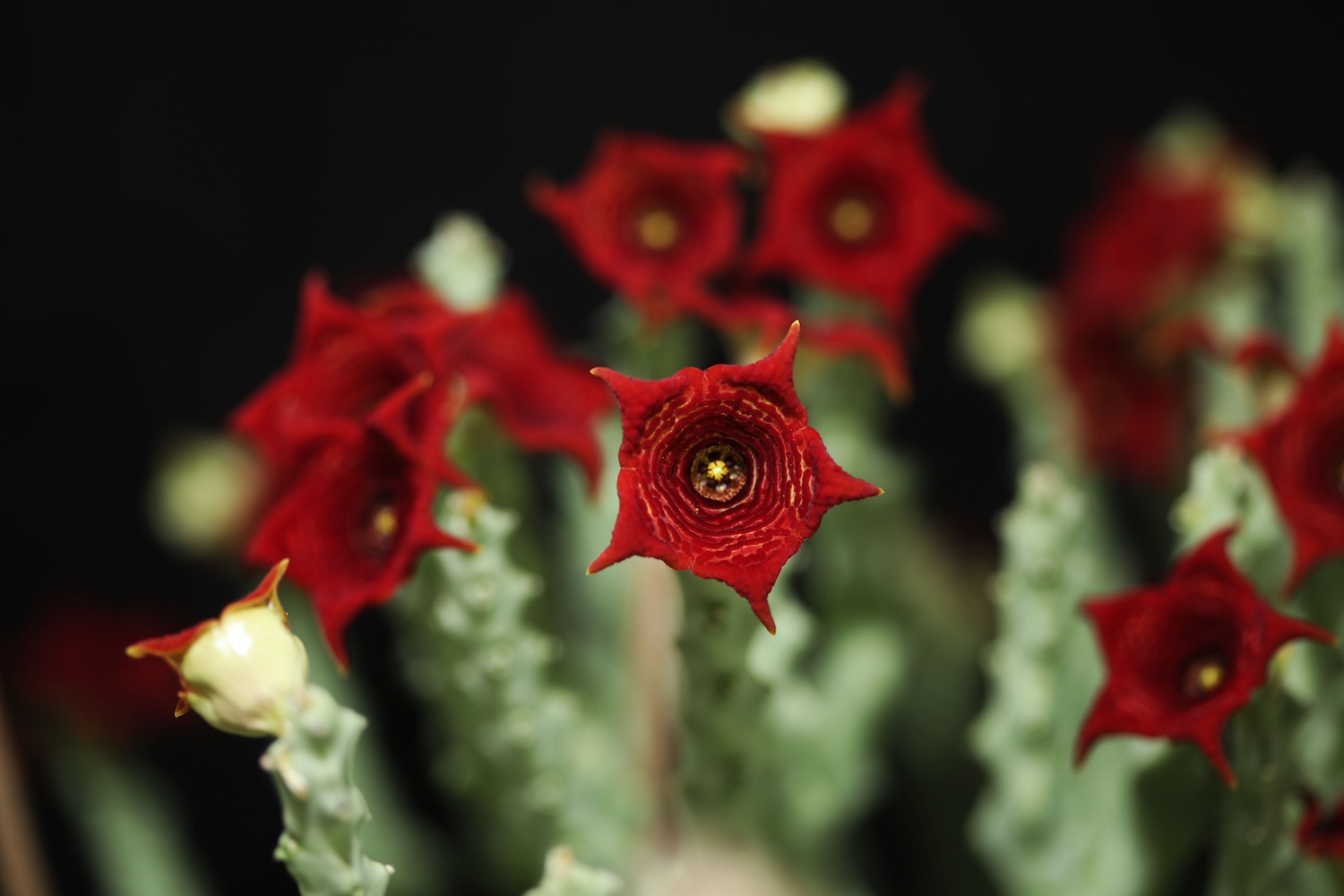
After breakfast, we leave Arher and travel towards Homhil, one of Socotra’s most beautiful protected areas. Here, rugged limestone landscapes support an extraordinary concentration of endemic plants, including dragon’s blood trees, frankincense trees and spectacular desert roses. We explore the plateau on foot, following trails through this remarkable vegetation to Homhil’s famous natural infinity pool. Perched high above the surrounding landscape, the freshwater pool offers breathtaking views towards the coast and provides the perfect opportunity for a refreshing swim. There is plenty of time during the afternoon to explore, photograph the unusual flora and enjoy the magnificent scenery before settling into our wilderness camp.
Overnight: Homhil.
Diborak Waterfalls & Momi
This morning we leave Homhil and continue our journey through the eastern landscapes of Socotra towards Diborak Waterfalls.
Fed by water descending from the Momi Plateau, the falls provide another striking contrast to the island’s predominantly arid landscapes. We have time to explore the surrounding area and enjoy the freshwater pools before continuing into the highlands.
Our journey then takes us towards the Momi Plateau, passing through an increasingly wild landscape of mountains, canyons and traditional settlements. Endemic plants occur throughout this region, with desert roses and frankincense trees growing from seemingly impossible positions amongst the rocky slopes.
The plateau offers spectacular views across eastern Socotra and provides another opportunity to appreciate the extraordinary diversity of landscapes compressed into this relatively small island.
During the afternoon we explore the surrounding area at a relaxed pace, searching for endemic plants and wildlife and stopping at viewpoints along the way.
As evening approaches, our local team establishes camp in this remote highland setting and we enjoy dinner beneath the stars.
Overnight: Momi.

Dihamri Marine Reserve
Today we descend from the highlands towards Socotra’s northern coast and the protected waters of Dihamri Marine Reserve.
Socotra lies at the meeting point of several marine biogeographical regions, and its surrounding seas support a fascinating mixture of Indian Ocean, Red Sea and East African marine life. Socotra’s surrounding waters support more than 730 species of coastal fish.
At Dihamri, we spend the afternoon snorkelling and exploring the marine reserve. Cyclones have affected parts of Socotra’s coral reefs, but good areas of living coral remain and support diverse communities of reef fish and other marine life.
Depending upon conditions and good fortune, we may encounter colourful reef fish, octopus, lobsters and other crustaceans, as well as rays and occasional turtles. With much of the reef accessible from relatively shallow water, there is plenty of time to explore at an unhurried pace.
After emerging from the water, we relax beside the coast as the afternoon light fades across the sea.
Overnight: Dihamri Marine Reserve.

Ayhaft Canyon
After breakfast, we leave Dihamri and travel westwards towards Ayhaft Canyon, one of Socotra’s most important natural areas.
Cut deeply into the surrounding mountains, the canyon creates a sheltered environment where freshwater and greater moisture support noticeably greener vegetation than across much of the island.
We spend the afternoon exploring the canyon on foot, following trails through this remarkable landscape and searching for Socotra’s characteristic plants and wildlife. The steep surrounding mountains create impressive views, while natural freshwater pools provide opportunities to cool off and swim.
Birdlife can be particularly rewarding, and we keep watch for endemic species such as Socotra sunbirds and Socotra sparrows amongst the vegetation. Later in the day, we establish our camp within this beautiful wilderness setting. As darkness falls across the canyon, we enjoy another freshly prepared dinner and a peaceful evening surrounded by the mountains.
Overnight: Ayhaft Canyon.

Detwah Lagoon
Today we cross towards the far west of Socotra and one of the most beautiful coastal landscapes on the island: Detwah Lagoon.
Situated beside the traditional fishing town of Qalansiyah, Detwah is a spectacular marine protected area where an immense sweep of brilliant white sand separates a shallow turquoise lagoon from the open sea. The combination of mountains, dunes, clear water and an almost untouched coastline creates one of Socotra’s most memorable landscapes.
After arriving and exploring the shoreline, we undertake a trek into the hills overlooking the lagoon. Our route climbs above the coast to a spectacular viewpoint, revealing the extraordinary scale and colours of Detwah below – white sandbars curving through brilliant turquoise water against the rugged mountains beyond.
We then descend to the lagoon with time to explore its shallow waters and shoreline. Wading birds and other coastal species are frequently encountered, while the clear shallows support a fascinating variety of marine life. As evening approaches, we establish camp close to the lagoon and watch the changing light transform this extraordinary landscape.
Overnight: Detwah Lagoon.

Shu’ab Beach
This morning we experience Socotra from an entirely different perspective as we set out by boat from Detwah Lagoon towards the remote shores of Shu’ab.
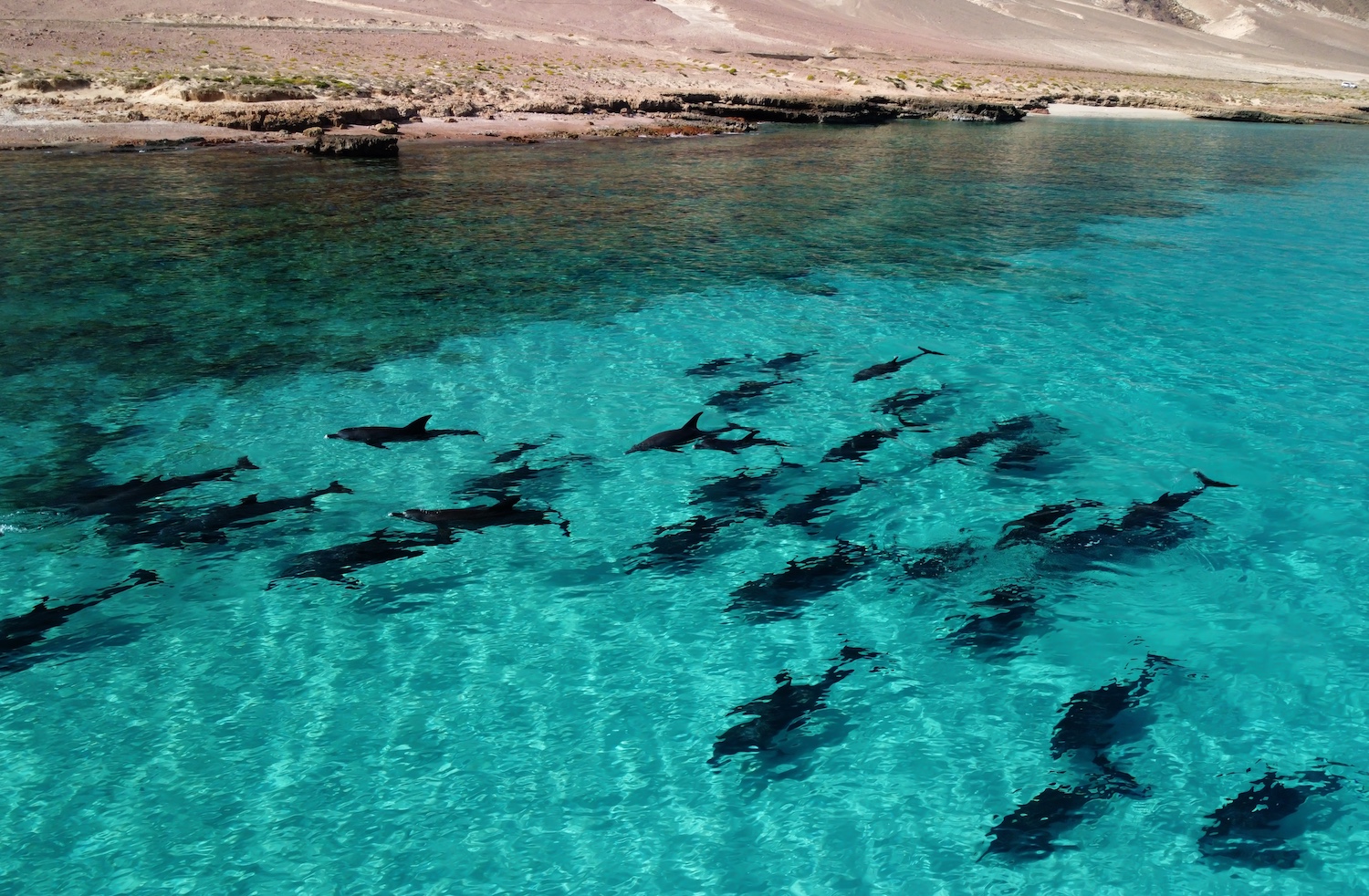
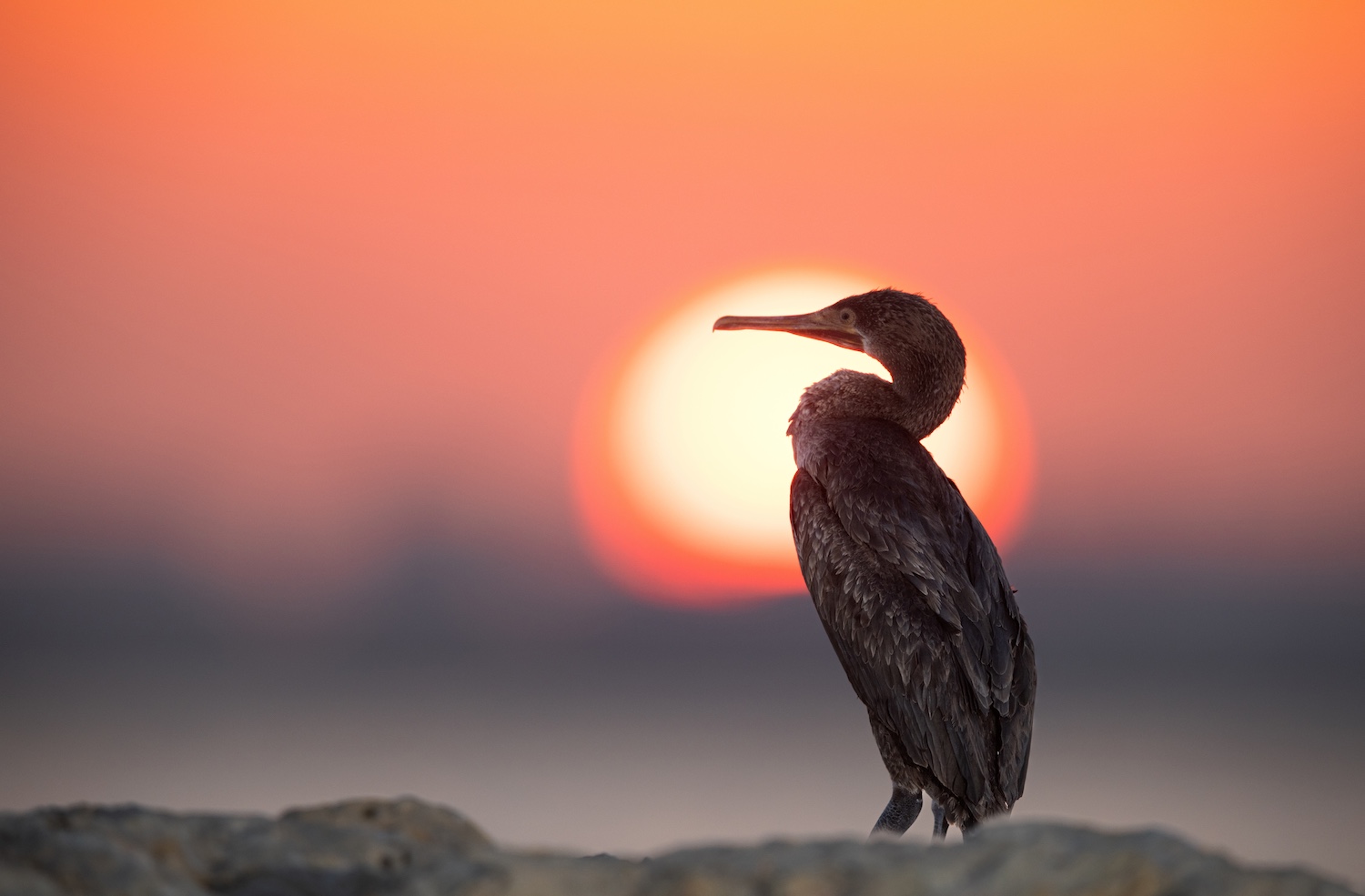
Our journey follows the spectacular western coastline, passing beneath rugged cliffs and otherwise inaccessible stretches of wilderness. We keep watch for spinner dolphins, which are regularly encountered in these waters, while cormorants, gulls, herons and other seabirds may be seen along the coast.
Eventually, the magnificent white sands of Shu’ab Beach appear ahead of us. Accessible primarily by sea, this wonderfully isolated beach is surrounded by dramatic mountains and beautifully clear turquoise water.
We have the remainder of the day to enjoy this extraordinary setting. There is time to swim in the warm sea, walk along the deserted shoreline, explore the surrounding landscape or simply relax and appreciate the remoteness of our surroundings.
As the day draws to a close, we establish camp directly beside this magnificent beach and enjoy dinner beneath the stars, accompanied by the sound of the Indian Ocean.
Overnight: Shu’ab Beach.
Return to Detwah
We wake in one of the most beautiful locations of the expedition, with the morning free to enjoy the tranquillity of Shu’ab Beach before beginning our return journey.
There is time for an early swim or a walk along the shoreline before our local team packs away camp and we board our boat for the journey back towards Detwah.
Once again, the voyage provides wonderful views of Socotra’s wild western coastline. We keep watch for dolphins and seabirds along the way while enjoying a perspective of the island that can only be experienced from the sea.
Arriving back at Detwah Lagoon, we have the afternoon to enjoy this remarkable protected area at a relaxed pace. The shallow turquoise waters, immense white sands and surrounding mountains make Detwah an endlessly rewarding place to explore and photograph.
As evening approaches, we settle into camp beside the lagoon for a second night, with time to enjoy sunset and another freshly prepared dinner beneath the stars.
Overnight: Detwah Lagoon.
Detwah & Delisha Beach
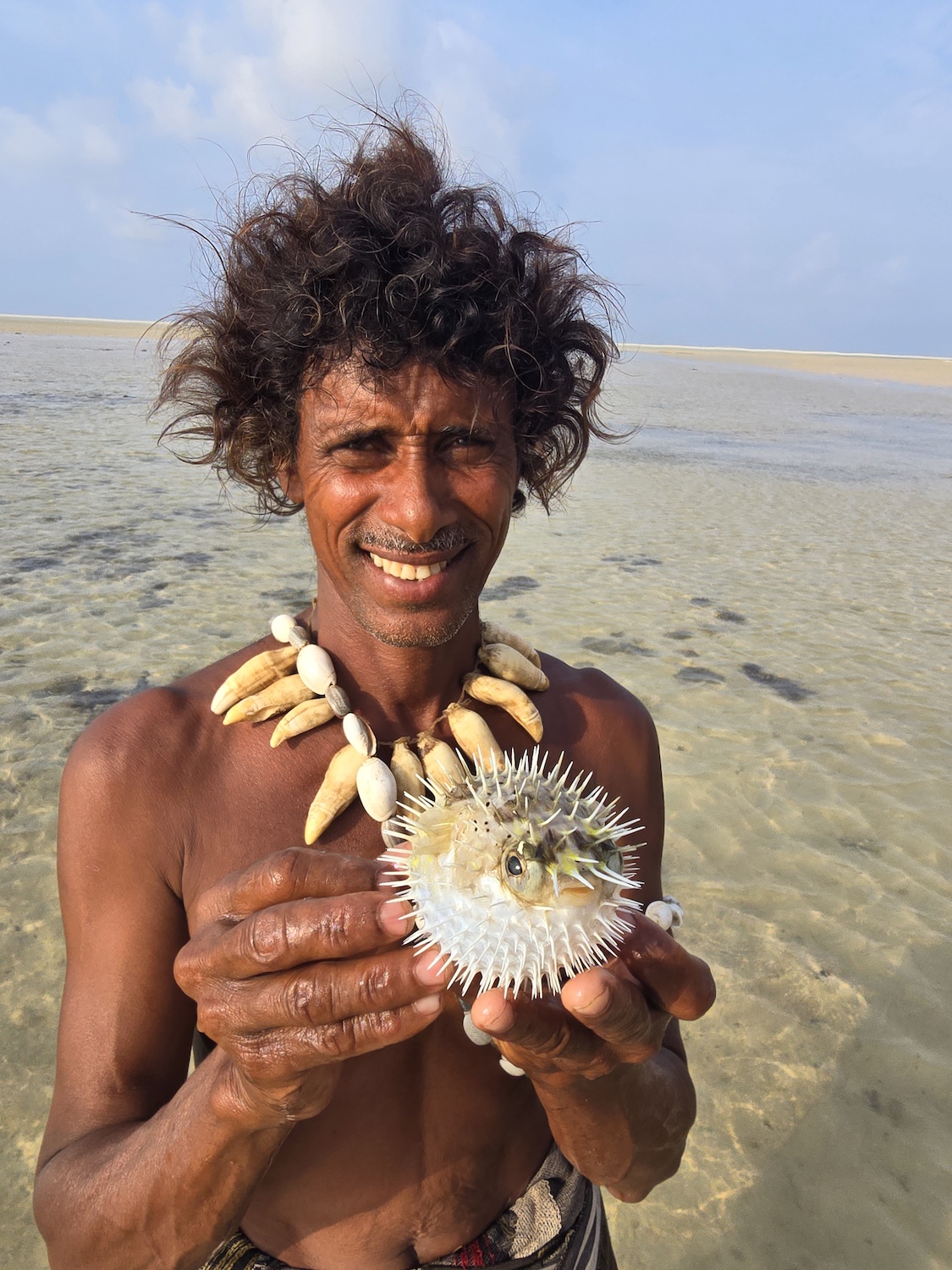
This morning we enjoy one of the most memorable cultural encounters of the expedition as we meet Ellai, a local Socotran who has become famous for his extraordinary knowledge of the natural environment surrounding Detwah Lagoon.
Living close to the lagoon and intimately familiar with its wildlife, Ellai introduces us to this remarkable ecosystem from a local perspective. We explore the shoreline and shallows, discovering some of the marine creatures that inhabit the lagoon and learning about traditional life in this remote corner of Socotra.
Later, we leave Detwah and journey eastwards to Delisha Beach. Here, brilliant white sands meet the turquoise sea beneath a landscape dotted with characteristic Socotran vegetation.
There is time to swim, explore the beach and search for endemic plants before climbing the immense sand dune overlooking the coast. From its summit we enjoy spectacular views as the lowering sun illuminates the beach and surrounding landscape.
This day also provides valuable flexibility within our itinerary should weather, sea conditions or other circumstances cause delays earlier in the expedition.
Overnight: Delisha Beach.
Return to Hadibo
Following a final morning beside the coast, we leave Delisha and travel to Hadibo, Socotra’s principal town.
After almost two weeks exploring the island’s remote forests, mountains, canyons, dunes and beaches, today provides an opportunity to experience another side of Socotran life and discover more of the island’s culture and history.
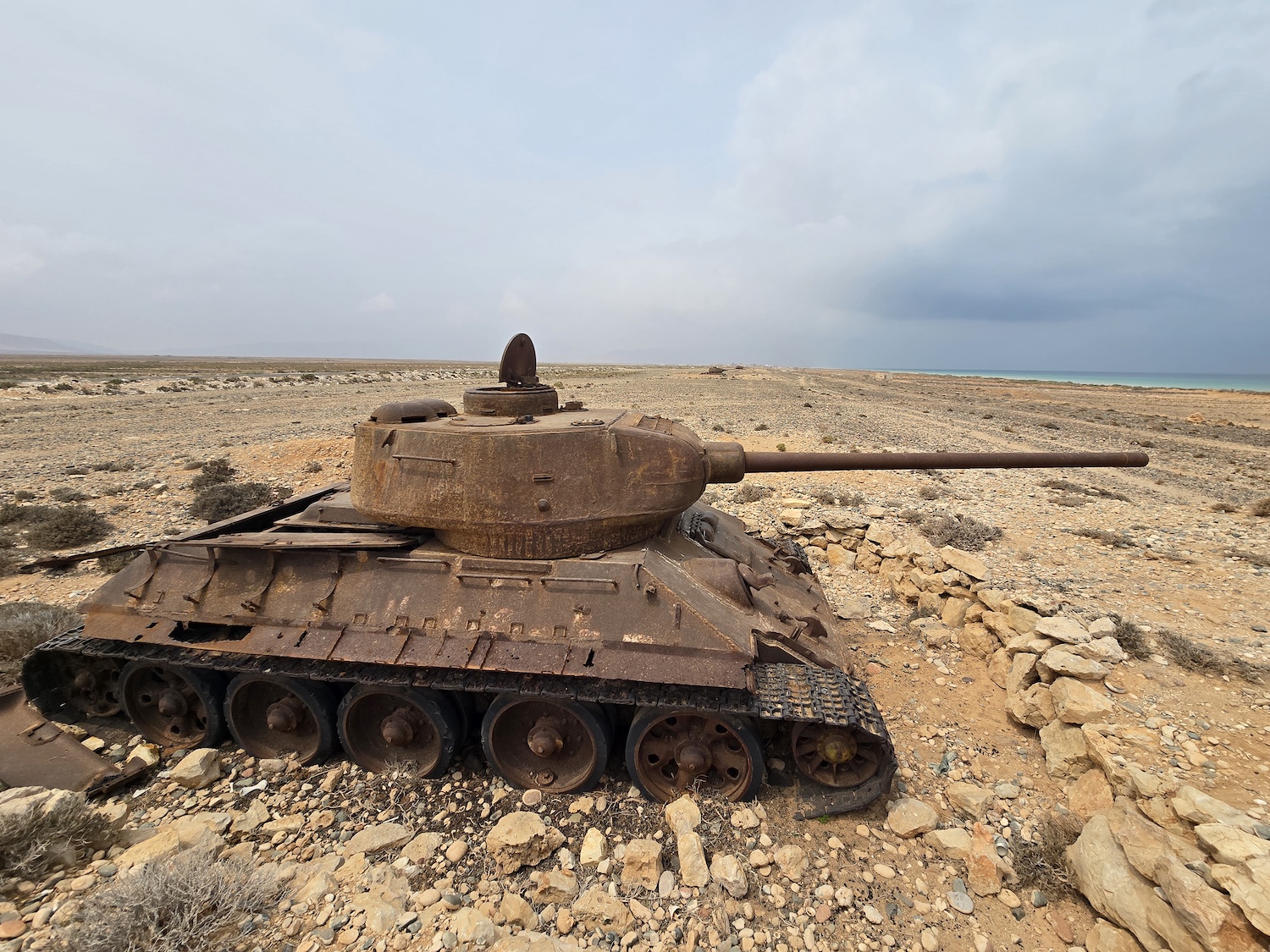
Along the coast near Hadibo, we visit the remains of old military tanks, now abandoned amongst the rugged coastal landscape. These weathered relics provide a striking reminder of a very different chapter in Socotra’s recent history and make for an unusual photographic stop.
We then visit the local Women’s Association, where Socotran women produce a variety of handmade crafts and traditional products. Our visit provides an opportunity to learn about their work and purchase locally produced souvenirs directly from the community.
We also visit the UAE handicrafts bazaar, with time to browse locally made products and find final gifts and mementos of our journey.
Later, we settle into our accommodation and enjoy a final evening together, reflecting on an extraordinary journey through one of the most distinctive islands on Earth.
Overnight: Hotel in Hadibo.
Depart Socotra
After breakfast, our expedition draws to a close.
We transfer to Socotra Airport for our departing flight, saying farewell to the local team who have accompanied us throughout our journey.
Over the previous two weeks, we have travelled from ancient dragon’s blood forests and remote mountain plateaux to immense white dunes, freshwater canyons and some of the most beautiful beaches in the Indian Ocean. We have camped beneath the stars, explored caves and coral reefs, travelled by boat along wild coastlines and encountered the remarkable plants, wildlife and people that make Socotra so unique.
As our aircraft leaves the island behind, we have a final opportunity to look down upon its mountains and coastline – and reflect upon an unforgettable expedition through the Island of Dreams.
Our expedition concludes at Socotra Airport.
Hajhir Mountains
For those wishing to venture even deeper into Socotra, we offer an optional seven-day extension exploring some of the wildest and least accessible landscapes on the island.
Duration: 7 days / 6 nights
Difficulty: Moderate to challenging
Accommodation: Wilderness camping
Includes: Local mountain guides and pack camels
Please contact us for dates, availability and pricing – sales@redfernadventures.com
A TRUE WILDERNESS ADVENTURE
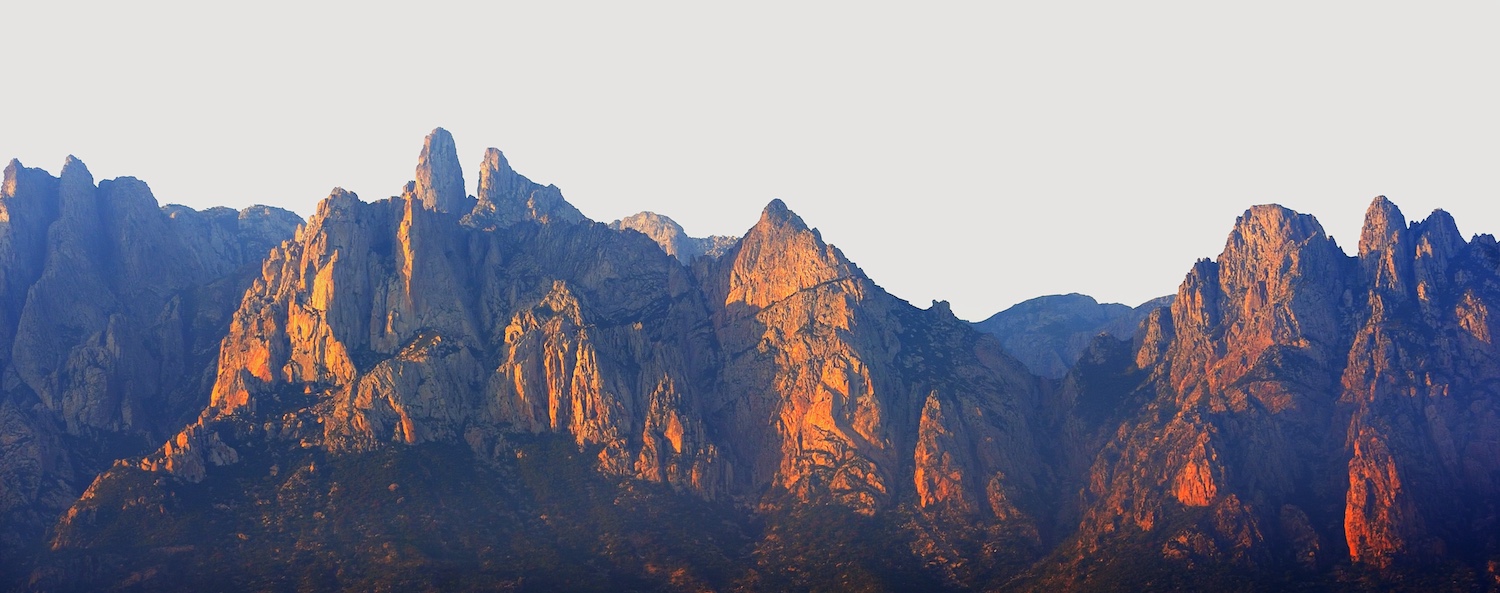
Rising to more than 1,500 metres, the Hajhir Mountains form the spectacular, rugged heart of Socotra. High peaks, deep valleys and isolated plateaux shelter an extraordinary diversity of endemic plants and some of the island’s wildest landscapes.
Accompanied by experienced local guides and pack camels carrying our camping equipment, we trek deep into this remote mountain wilderness, following ancient trails through dramatic valleys, high plateaux and isolated Bedouin settlements. Each evening we establish a wilderness camp amongst the mountains, enjoying freshly prepared meals and spectacular nights beneath the stars.
This is an exceptional opportunity to experience a side of Socotra that few visitors ever see – travelling on foot into the remote mountainous interior and becoming completely immersed in one of the island’s greatest wildernesses.
Participants should be comfortable walking for several hours each day over mountainous and occasionally steep terrain.
Lets head to Socotra Island
Join us in Socotra and encounter ancient dragon’s blood forests, immense white dunes and some of the most extraordinary landscapes on Earth.


BESPOKE PRIVATE TOURS
If you prefer not to join a group tour, we can tailor a private trip to match your dates and interests. Please email us for more details.