
Papua
Indonesia
$4,450
Switch CurrencyWe explore habitats supporting N. neoguineensis, N. insignis, N. klossii and other spectacular species before continuing to Waigeo and Misool. Along the way, we also search for some of New Guinea’s legendary wildlife, including Wilson’s, Red, King, Lesser and Twelve-wired Birds-of-paradise.
BrochureStart Point
Monday, August 16th, 2027
Jayapura
End Point
Friday, August 27th, 2027
Jayapura

N. mirabilis

Nepenthes sp.

N. maxima x N. klossii

About Papua New Guinea
Papua is home to some of the most extraordinary plants and wildlife on Earth. From steamy lowland rainforest to cool mountain forests and the spectacular islands of Raja Ampat, this expedition takes us through an exceptional diversity of landscapes in search of New Guinea’s remarkable Nepenthes pitcher plants.
Papua is one of the most extraordinary and biologically diverse regions on Earth, but exploring its remote forests requires flexibility, patience and a genuine sense of adventure.
Our journey takes us through an exceptional variety of environments, from hot lowland rainforest and remote mountain habitats to the tropical islands and limestone landscapes of Raja Ampat. Some of the areas we visit are far
removed from conventional tourist routes.
We work closely with experienced local guides and partners, whose knowledge is invaluable in locating plants and wildlife and adapting our programme to current conditions. Road conditions, domestic flights, boat schedules, weather and local access can occasionally require changes to the planned itinerary. Our programme is therefore deliberately flexible, allowing us to make the best use of conditions on the ground.
Our aim is simple: to experience these extraordinary plants responsibly, support the people who help protect them and leave a genuinely positive impact.

Included
- All accommodation throughout the itinerary (shared twin or double room)
- All meals and non-alcoholic drinks
- Expert expedition team and professional guides
- All activities and excursions as per the itinerary
- All ground transport and other travel logistics during the itinerary
- All permits, permissions and entry fees
- Basic medical kit and satellite, radio or emergency phone
Not Included
- International flights to the start point and from the end point
- Travel insurance
- Passport and travel documents (e.g. visa, if required for your nationality)
- Pre- and Post-expedition accommodation
- Tips and gratuities (optional)
- Alcoholic beverages
- Souvenirs
- Personal expenses
- Optional single room upgrade
Itinerary
From the rainforests and mountains of New Guinea to the spectacular islands of Raja Ampat, this extraordinary expedition takes us in search of remarkable Nepenthes, birds-of-paradise and some of Papua’s greatest natural wonders.
Accommodation varies throughout the journey, ranging from hotels in the larger towns to simple locally run accommodation in more remote areas.
Comfort may sometimes be basic, but this is part of the experience of exploring a remarkable region that relatively few travellers ever encounter. Above all, this is a genuine natural-history expedition. We travel to Papua not simply to visit places, but to spend time searching for, observing and photographing extraordinary plants and wildlife in their natural habitats.
Note: Papua is a beautiful land, but road infrastructure remains limited and journey times can be long, rough and slow. While these overland journeys provide access to some of the region’s finest wildlife, participants should be prepared for the road travel included in this itinerary.
Download Brochure
THE CYCLOPS MOUNTAINS
Our expedition begins in Jayapura, gateway to the extraordinary forests of northern New Guinea. After pick up from your hotel, we travel to the spectacular Cyclops Mountains. Our principal botanical target is Nepenthes neoguineensis, which can be locally common and displays considerable variation in pitcher colour and form. We take time to examine and photograph both lower pitchers and the different forms produced by climbing stems.
We also search for Nepenthes ampullaria, whose distinctive squat pitchers can form remarkable clusters across the forest floor, together with N. mirabilis in warmer, wetter habitats. As we explore higher ground, N. maxima becomes another possibility. Where different species occur together, we keep watch for naturally occurring hybrids.
Beyond the pitcher plants, these forests support orchids, aroids, palms, ferns and an exceptional diversity of tropical vegetation. Birdlife provides another dimension to our first day, with possibilities including parrots, fruit-doves, kingfishers, honeyeaters and cuckooshrikes. The walking is generally easy to moderate, although conditions can be hot and humid. We return to Jayapura for dinner in a local restaurant.
Overnight: Jayapura.
BIRDS-OF-PARADISE & NABIRE
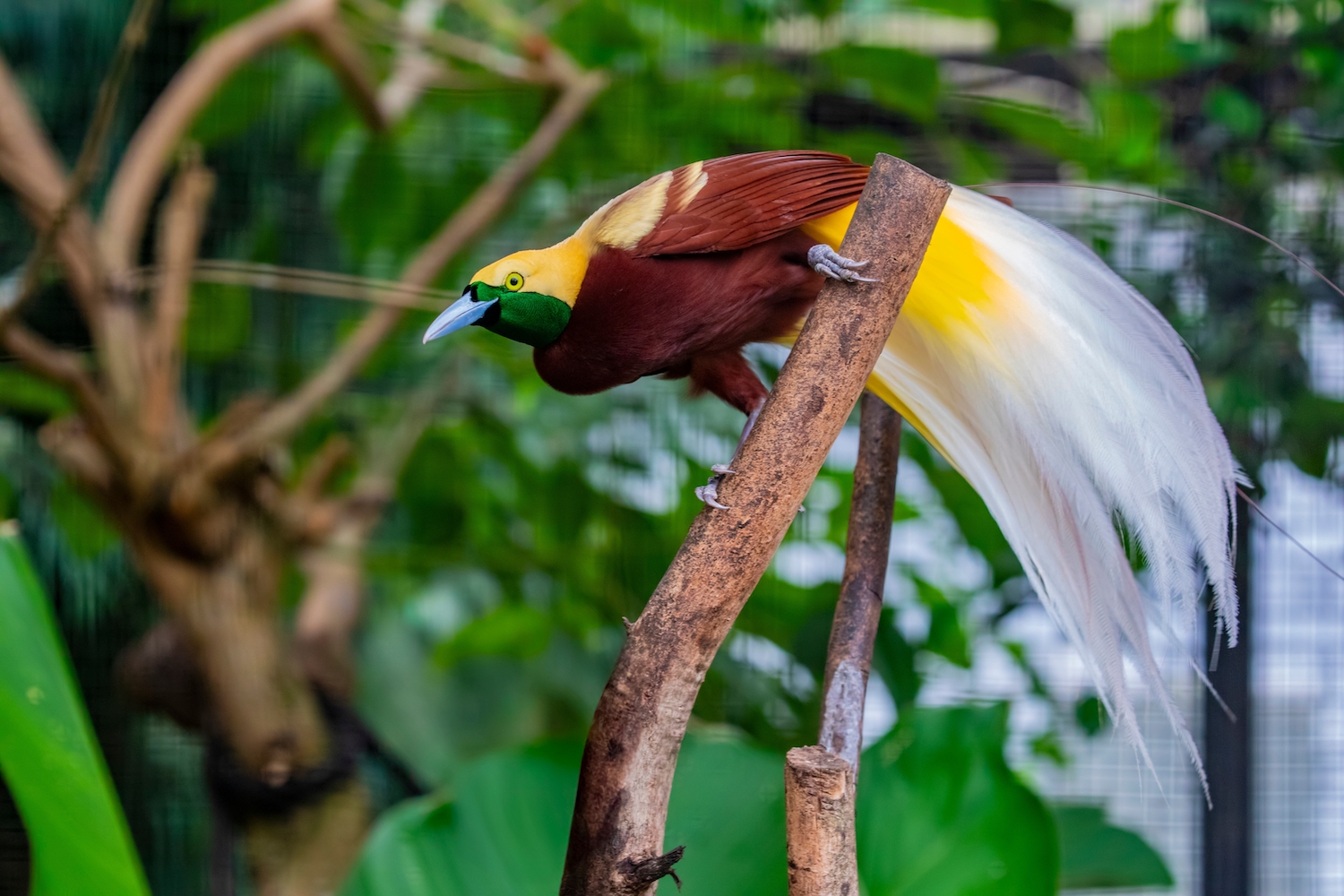
We depart well before dawn for the Nimbokrang lowlands west of Sentani. This extensive mosaic of lowland rainforest, swamp forest and forest edge provides our first dedicated opportunity to experience one of New Guinea’s greatest natural wonders – its spectacular birds-of-paradise.
Accompanied by an experienced specialist bird guide, we position ourselves before first light at a currently active display area. Our principal targets include King, Lesser and Twelve-wired Birds-of-paradise. These species use different display sites, so our guide will select the best current opportunity according to recent activity. Other possibilities include Pale-billed Sicklebill, Magnificent Riflebird, Victoria Crowned Pigeon, Brown Lory and Salvadori’s Fig-Parrot, along with kingfishers, kookaburras, hornbills and numerous other parrots and pigeons.
After our morning birding, we return towards Jayapura and transfer to the airport for our flight to Nabire. On arrival, we meet our local team and settle into our accommodation. Depending upon our arrival time, we may be able to see populations of Nepenthes mirabilis today.
Overnight: Nabire.

NABIRE NEPENTHES
Today begins one of the most exciting botanical sections of our expedition. We explore carefully selected habitats around Nabire before beginning our journey towards Papua’s mountainous interior.
Our principal target is the magnificent Nepenthes insignis. This impressive species produces substantial pitchers with beautifully marked interiors and conspicuous peristomes, making it a particularly rewarding plant to observe and photograph in its natural habitat.
Other sites may reveal unusually large Nepenthes ampullaria, robust forms of N. mirabilis and N. maxima, together with naturally occurring hybrids where different species grow alongside one another.
After our botanical exploration, we begin the overland journey towards the Central Highlands. The drive is an expedition in itself as the landscape changes from hot, humid lowland rainforest into progressively cooler hill and montane vegetation.
At suitable stopping places we search for orchids, tree ferns and other upland plants while watching for birds. Fruiting and flowering trees may attract honeyeaters, fantails, monarchs, whistlers, parrots and fruit-doves.
Eventually we reach the highland region and settle in for the night, surrounded by a dramatically different landscape from the tropical lowlands we left earlier in the day.
Overnight: Central Highlands.

NEPENTHES KLOSSII
Today is devoted to one of the great botanical prizes of our journey: Nepenthes klossii. Travelling with local guides, we explore cool, wet montane habitats in search of this extraordinary species. Its unusually shaped pitchers, elongated opening and strongly developed lid make N. klossii immediately distinctive when mature plants are encountered.
We take ample time to photograph plants in habitat and examine their ecology. Nepenthes maxima can also occur in these highlands, and where the two species grow together
we search carefully for possible natural hybrids and intermediate forms (below right). Another particularly exciting objective is a distinctive highland Nepenthes population of uncertain taxonomic identity. If access permits, we hope to photograph these plants.
The surrounding forest is itself magnificent, with moss-covered branches, orchids, ferns and luxuriant montane vegetation. Birding is opportunistic, with possibilities including honeyeaters, whistlers, robins, berrypeckers, lorikeets and fruit-doves. After completing our fieldwork, we begin the long journey back towards Nabire.
Overnight: Nabire.
Note: At the time of writing, there has been some local unrest in the area where Nepenthes klossii grows. We have already undertaken a scouting trip to ensure we can visit these plants safely, however, depending upon conditions at the time of our expedition and the advice of our local team, we may choose not to overnight in the area. Instead, we may travel through the region overnight in a convoy of large, comfortable 4×4 vehicles. We will ensure that there is plenty of space in the vehicles so that everyone can rest during the journey. Conditions may, of course, have settled by the time of our visit, in which case we hope to overnight in Waghete as originally planned. Our arrangements will
remain flexible, with the safety and comfort of the group our
priority.
NABIRE TO SORONG
After breakfast, we transfer to Nabire Airport and fly west to Sorong, the principal gateway to the spectacular islands of Raja Ampat.
The exact routing and flight schedule will be confirmed according to the services operating for our expedition dates.
Depending upon our arrival time, the remainder of the day is deliberately flexible.
There may be an opportunity for some relaxed forest-edge, mangrove or coastal birding, or simply time to rest after the demanding highland section of our journey.
We also use the afternoon to organise our equipment, purchase supplies and prepare for the boat transfers and island fieldwork ahead.
Overnight: Sorong.

SORONG TO WAIGEO
This morning we travel by boat from Sorong to Waigeo, the largest of the Raja Ampat islands. The journey provides our first experience of this spectacular archipelago, with forested islands rising from warm tropical seas.
After reaching Waisai and completing the necessary formalities, we continue to our locally run accommodation and begin exploring suitable habitats.
Waigeo represents a dramatic ecological change. Nutrient-poor habitats associated with unusual geology support a specialised flora, and our principal botanical target is the little-photographed Nepenthes danseri. We also search for N. maxima, N. ampullaria and N. mirabilis.
Waigeo is also one of the great birding destinations of our journey. We meet our specialist bird guide and make preparations for the next two very early mornings, when we will search for two of the world’s most spectacular birds-of-paradise.
Overnight: Waigeo.
NEPENTHES OF WAIGEO
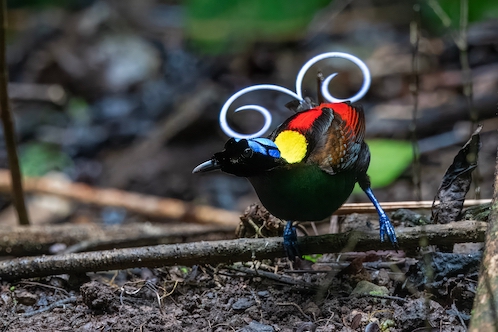
We have two days to fully explore Waigeo. We rise well before dawn and travel with our specialist local guide to a known Wilson’s Bird-of-paradise display area. Reaching our viewing position before first light provides the best opportunity to watch a male visiting its meticulously maintained court on the forest floor. Wilson’s Bird-of-paradise is one of New Guinea’s most extraordinary birds, with vivid scarlet, yellow and black plumage, a brilliant bare blue crown and remarkable curled tail feathers.
After our early-morning birding, the main focus of the day turns to the Nepenthes of Waigeo (we likely did not see all of the species yesterday, so continue visiting populations). Our principal target is Nepenthes danseri, a remarkable species endemic to Waigeo. We explore suitable habitats with our local guides, taking plenty of time to examine and photograph plants and understand the specialised environments in which they grow. We also search for N. maxima, N. ampullaria and N. mirabilis, allowing us to compare several very different pitcher plants growing within the same island landscape. Where access and local permissions allow, we may also search for the intriguing little-known plant provisionally referred to as Nepenthes sp. “Raja Ampat”. This may represent a new species, but it remains an exploratory target and cannot be guaranteed.
Depending upon the time available, the afternoon provides several possibilities. We may arrange
snorkelling or scuba diving (at additional cost), providing an opportunity to experience the extraordinary marine biodiversity for which Raja Ampat is famous.
Alternatively, we can continue exploring the forest for birds and other wildlife. Birding possibilities include Raja Ampat Pitohui, Waigeo Shrikethrush, Frilled Monarch, Golden Monarch, Yellow-billed Kingfisher, Papuan Hornbill, Eclectus Parrot, Palm Cockatoo, fruit-doves and imperial pigeons. We can also keep watch for mammals and other forest wildlife, including the Waigeo cuscus. After exploring Waigeo’s remarkable terrestrial and marine environments, we return to our accommodation.
Overnight: Waigeo.

WAIGEO TO MISOOL
Today we journey deeper into Raja Ampat, travelling south towards spectacular Misool. The precise transfer will depend upon the boat and ferry arrangements available for our expedition dates and may involve travelling via Sorong. Sea conditions and local schedules will determine our exact route.
The journey itself reveals Raja Ampat at its most spectacular: innumerable forested and limestone islands rise from turquoise waters, with hidden bays, narrow channels and immense karst formations creating an extraordinary tropical landscape.
During the crossing, we keep watch for terns, frigatebirds and other seabirds, while dolphins and other marine wildlife are also possible.
Misool’s limestone landscapes provide yet another ecological contrast with the forests and unusual substrates of Waigeo. If daylight and our arrival time permit, we make an introductory exploration before settling into our accommodation.
Overnight: Misool area.

EXPLORE MISOOL
Our next two days are devoted to exploring the extraordinary natural history and spectacular landscapes of Misool, with a particular focus on its remarkable Nepenthes.
Our principal botanical target is Nepenthes misoolensis, one of the most extraordinary pitcher plants of Raja Ampat. Unlike many Nepenthes encountered in rainforest or montane habitats, this remarkable species grows amongst Misool’s dramatic coastal limestone cliffs, sometimes occupying precipitous rock faces immediately above the tropical sea.
Reaching these populations is part of the adventure. Travelling by boat through turquoise channels and amongst forest-covered limestone islands, we approach immense cliffs rising directly above coral reefs and crystal-clear water. In places, Nepenthes grow from cracks and ledges in the limestone above the sea. The combination of pitcher plants, sheer limestone, tropical forest and coral reef creates one of the most spectacular Nepenthes habitats anywhere in the world.
Accompanied by our local guides, we travel between suitable sites by boat, landing where conditions allow and exploring these remarkable limestone habitats on foot. Having two full days gives us plenty of time to observe and photograph Nepenthes misoolensis, examining different pitcher stages and the considerable variation in colour, form and growth habit amongst individual plants.
We also search for the impressive Nepenthes treubiana, another important botanical target on Misool. Its robust pitchers and different growth habit provide a fascinating contrast with N. misoolensis and further demonstrate the remarkable diversity of pitcher plants encountered during our journey.
Close to some of the Nepenthes sites are several of Misool’s other treasures – its ancient rock-art sites. Where access and our programme permit, our boat journeys take us beneath spectacular limestone cliffs bearing ancient pictograms and hand stencils. These remarkable artworks include human figures, geometric designs, boats and representations of animals and marine life, providing a fascinating glimpse into the long human history of the archipelago.
Misool’s wildlife accompanies us throughout our explorations. We keep watch for parrots, cockatoos, fruit-doves, imperial pigeons, kingfishers and other Papuan birds as we move between botanical sites, while our journeys through the islands also provide opportunities to watch for seabirds and marine wildlife.
EXPLORING MISOOL’S CORAL REEFS
During periods of downtime, and depending upon sea conditions and our field programme, it may also be possible to arrange snorkelling and scuba-diving excursions at additional cost. Misool lies amongst the spectacular coral reefs of Raja Ampat, and exploring beneath the surface reveals an entirely different side to this extraordinary region. Beautiful coral gardens, extraordinarily diverse reef fish and clear tropical waters make these reefs amongst the most spectacular marine environments in the world.
Snorkelling can be arranged for those wishing to explore the reefs from the surface, while scuba diving can be organised for suitably qualified participants. All marine activities are optional and will be fitted around our principal botanical programme.
The precise programme over these two days remains deliberately flexible. Weather, tides and sea conditions can influence access to individual sites, and having two full days provides valuable contingency. If conditions prevent us reaching a particular Nepenthes population on the first day, we have another opportunity; if our principal botanical objectives are achieved early, we can devote additional time to photography, rock art, wildlife and the marine environment.
These two days promise to be among the great highlights of the expedition – exploring spectacular pitcher plants growing on limestone cliffs above coral reefs, surrounded by the turquoise seas and extraordinary island landscapes of Raja Ampat.
Overnight: Misool area (both nights).

RETURN TO JAYAPURA
After breakfast, we begin our journey back to Jayapura. Leaving Misool by boat, we travel through the spectacular island landscapes of Raja Ampat towards Sorong. During the crossing, we keep watch for terns, frigatebirds and other seabirds, as well as dolphins and other marine wildlife.
On arrival in Sorong, we transfer to the airport for our domestic flight to Jayapura, completing our journey across Indonesian New Guinea.
Over the previous twelve days, we have travelled from the lowland rainforests and mountains of northern New Guinea to the extraordinary islands of Raja Ampat, encountering remarkable Nepenthes, spectacular birds-of-paradise, ancient rock art, tropical forests, limestone landscapes and an exceptional diversity of wildlife.
Upon arrival in Jayapura, our expedition concludes.
We recommend overnighting in Jayapura before taking an onward flight home, providing additional flexibility in case of delays or changes to domestic transport.

RAJA AMPAT
As the final days of our expedition are spent in Raja Ampat, home to some of the most beautiful beaches and coral reefs on Earth, why not extend your journey with a few relaxing days at a resort in this spectacular part of Indonesia?
We can custom-design a bespoke add-on trip to suit your interests and budget, arranging a stay at the resort of your choice together with all necessary boat transfers and logistics for your eventual return to the mainland.
Spend your days snorkelling amongst spectacular coral reefs, scuba diving, exploring tropical islands and lagoons, searching for wildlife or simply relaxing on a beautiful beach surrounded by the extraordinary scenery of Raja Ampat.
Please email sales@redfernadventures.com to discuss options and pricing. A five day / four night suggested itinerary is below.
READY FOR THE ADVENTURE OF A LIFETIME?
Join us in Papua and encounter extraordinary pitcher plants, spectacular birds-of-paradise and some of New Guinea’s greatest natural wonders.


BESPOKE PRIVATE TOURS
If you prefer not to join a group tour, we can tailor a private trip to match your dates and interests. Please email us for more details.