
Borneo
Asia
$4,450
Switch CurrencyDuring this expedition, we explore the celebrated orchid collections of Kinabalu and Tenom, search for wild orchids in the cloudforests of Gunung Alab and Mount Trus Madi, discover the specialised flora of lowland peat swamp forest and journey into the limestone landscapes of Gunung Mulu National Park.
BrochureStart Point
Sunday, June 20th, 2027
Kota Kinabalu
End Point
Saturday, July 3rd, 2027
Kota Kinabalu

Mount Kinabalu

Kundasang Memorial Gardens

Orchids

About Borneo
Borneo is one of the greatest botanical destinations on Earth.
Across its ancient rainforests, limestone valleys, peat swamps and mist-shrouded mountains, thousands of orchid species occupy an extraordinary range of habitats. Some form immense clumps high in the forest canopy, while others are miniature plants concealed among moss, leaf litter and cloudforest branches.
Borneo is one of the finest wildlife destinations in Asia. In addition to orchids, during this itinerary we have a chance to see many of the island’s most iconic species. Many of these can be seen during the optional add-on trip.

Included
- All accommodation throughout the itinerary (shared twin or double room)
- All meals and non-alcoholic drinks
- Expert expedition team and professional guides
- All activities and excursions as per the itinerary
- All ground transport and other travel logistics as per the itinerary
- All permits, permissions and entry fees
- Basic medical kit and satellite, radio or emergency phone
- Daily expedition briefings and recaps during the itinerary
Not Included
- International flights to the start point and from the end point
- Travel insurance
- Passport and travel documents (e.g. visa, if required for your nationality)
- Pre- and Post-expedition accommodation
- Tips and gratuities (optional)
- Alcoholic beverages
- Souvenirs
- Personal expenses
- Optional single room upgrade
Itinerary
This expedition has been designed for orchid enthusiasts and naturalists. Many walks involve frequent stops to examine orchids, carnivorous plants, ferns and other botanical treasures. Patience and careful observation are rewarded, and the pace is deliberately relaxed to maximise opportunities for photography and plant identification.
Note: Orchid flowering varies according to season, altitude and local weather conditions. The genera and species listed throughout this itinerary represent orchids recorded from, cultivated at or considered possible within the habitats visited. Although no individual wild orchid can be guaranteed, the expedition has been designed to explore an exceptional range of orchid-rich environments and maximise the diversity of plants encountered.
Prefer different dates? We can organise a private, bespoke trip to fit your schedule and preferences.
Extend your journey
Extend your journey with a relaxing stay on one of Sabah’s spectacular tropical islands—the perfect finale to your Borneo expedition.
Contact us for more information: sales@redfernadventures.com


ARRIVE AT KINABALU PARK
Our expedition begins with collection from your hotel in Kota Kinabalu, the capital of Sabah. We then journey inland through the foothills of the Crocker Range towards one of Southeast Asia’s greatest botanical landmarks: Mount Kinabalu.
Rising to 4,095 metres, Mount Kinabalu supports an extraordinary succession of habitats, from tropical lowland forest to moss-draped cloudforest and exposed alpine vegetation. Its remarkable variation in elevation, geology and climate has produced one of the richest concentrations of orchids on Earth. More than 860 orchid taxa representing approximately 134 genera have been documented from the mountain and its surrounding forests.
Upon reaching Kinabalu Park Headquarters, we visit the celebrated Kinabalu Botanic Garden. Established to showcase and conserve the mountain’s exceptional flora, the garden provides an ideal introduction to the orchid diversity we will encounter during the expedition. Depending upon the season and what is in flower, we may see slipper orchids such as Paphiopedilum hookerae and Paphiopedilum lowii, together with cultivated or naturally occurring representatives of genera including Bulbophyllum, Dendrobium, Coelogyne, Dendrochilum, Eria, Ceratostylis, Agrostophyllum, Appendicula, Liparis, Calanthe, Phaius, Flickingeria, Trichotosia, Oberonia, Pholidota, Cymbidium, Crepidium, Goodyera and Anoectochilus.
We then explore nearby cloudforest trails. Moss-covered trunks, tree ferns and branches laden with epiphytes create countless orchid habitats. Miniature Bulbophyllum, Dendrochilum and Oberonia may occur high on branches, while terrestrial Calanthe, Liparis, Crepidium, Goodyera and other jewel orchids may be found among the leaf litter.
Birds, squirrels and treeshrews are also frequently encountered, while clear weather may provide magnificent views of Mount Kinabalu’s immense granite summit.
Overnight: Kinabalu Park Chalets.

EXPLORE PORING SPRINGS
Today we descend from the cool montane forests surrounding Kinabalu Park Headquarters to the warm, humid lowlands of Poring Springs.
Our first stop is the Kundasang War Memorial, an important historical site surrounded by beautifully maintained gardens. Its cultivated orchid displays often contain flowering slipper orchids, including Paphiopedilum rothschildianum, although the precise collection and flowering display vary throughout the year.
We then continue to the Poring Orchid Conservation Centre and Orchid Garden. The cultivated collections offer opportunities to examine orchids that can be extremely difficult to locate or observe closely in the forest. Depending upon what is flowering, the displays may include Paphiopedilum, Phalaenopsis, Bulbophyllum, Dendrobium, Coelogyne, Dendrochilum, Aerides, Arachnis, Renanthera, Vanda, Robiquetia, Thrixspermum, Trichoglottis, Pomatocalpa, Cleisostoma, Luisia, Appendicula, Agrostophyllum, Cymbidium, Grammatophyllum, Phaius, Calanthe, Spathoglottis and Eulophia.
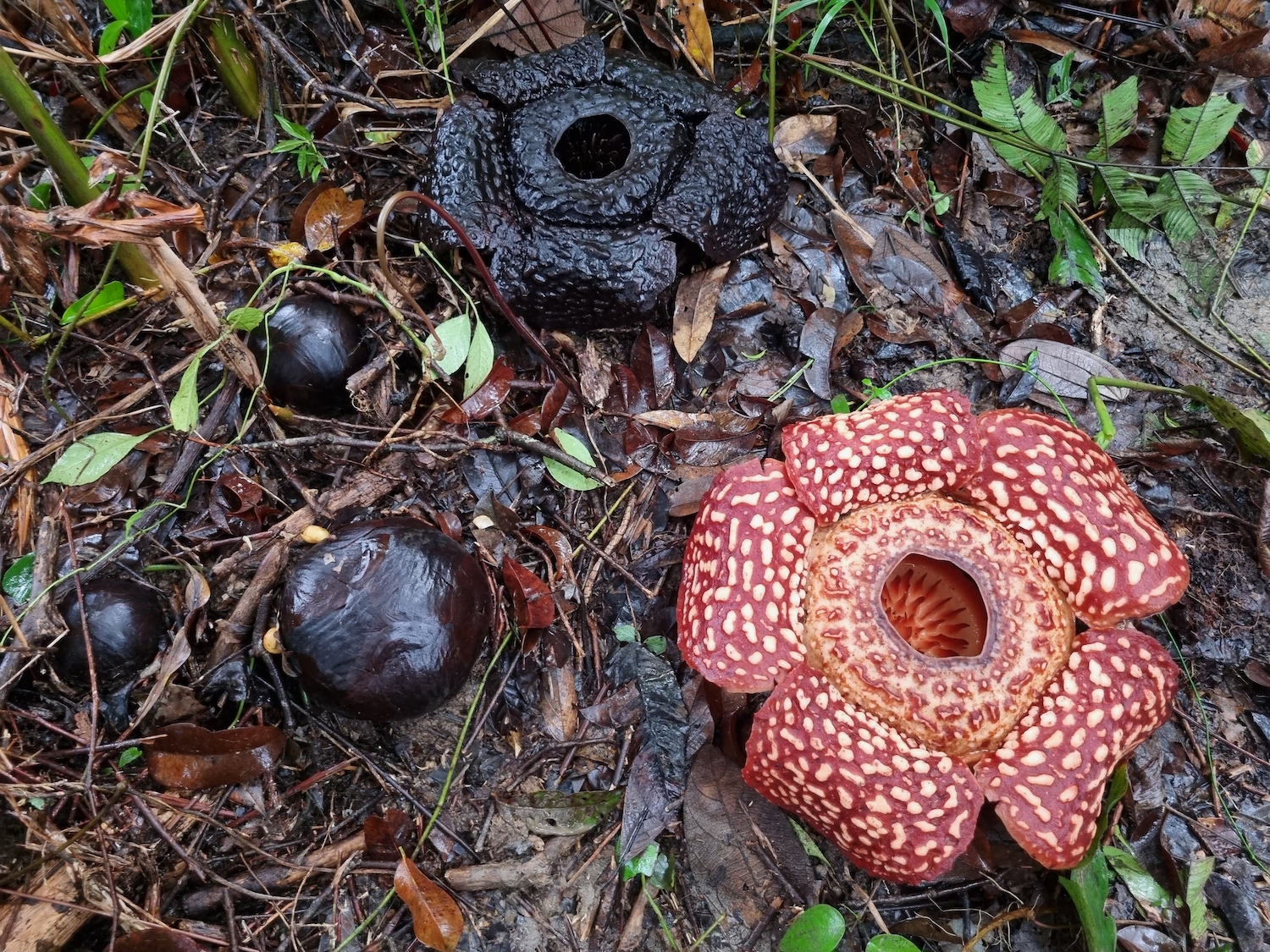
One of today’s other great botanical objectives is the chance to encounter Rafflesia keithii. Several community reserves near Poring protect populations of this extraordinary parasitic plant. Flowers cannot be guaranteed because each bloom lasts only a matter of days, but local guides monitor developing buds and flowering plants. Mature blooms can reach approximately 60–80 centimetres across and rank among the largest individual flowers on Earth.
During the afternoon, we explore Poring’s lowland rainforest trails and treetop canopy walkway. Orchids can be less conspicuous here than in the cloudforest because many grow high in the canopy, but the habitat may support epiphytic genera such as Bulbophyllum, Dendrobium, Eria, Appendicula, Agrostophyllum, Oberonia, Ceratostylis, Thrixspermum, Trichoglottis, Podochilus, Thelasis and Phalaenopsis. Terrestrial genera may include Corymborkis, Tropidia, Nervilia, Zeuxine, Goodyera, Calanthe and Crepidium.
The canopy walkway also provides a wonderful opportunity to appreciate the immense structure of Borneo’s lowland rainforest and to search for birds, squirrels, butterflies and other wildlife.
Overnight: Hotel in Poring Springs
GUNUNG ALAB
Today we leave Poring Springs and travel south into the Crocker Range, ascending towards the cool cloudforests of Gunung Alab.
The Crocker Range is one of Sabah’s most important centres of orchid diversity. More than 340 wild orchid species representing over 90 genera have been documented within Crocker Range Park, with especially high diversity in lower montane forest. Around 100 recorded species are endemic to Borneo.
We explore two contrasting cloudforest trails. The first follows a wooden boardwalk through dense, moss-covered forest. The second passes through a different section of montane vegetation where both naturally occurring orchids and planted native specimens may be observed.
Possible genera include Bulbophyllum, Dendrobium, Dendrochilum, Coelogyne, Ceratostylis, Eria, Appendicula, Agrostophyllum, Liparis, Crepidium, Calanthe, Pholidota, Trichotosia, Flickingeria, Oberonia, Podochilus, Thelasis, Cryptostylis, Corybas, Habenaria, Peristylus, Goodyera, Anoectochilus, Macodes, Odontochilus, Nephelaphyllum and Cymbidium. The Crocker Range is also notable for its jewel orchids, with recorded genera including Anoectochilus, Goodyera, Macodes and their allies.
Mosses and lichens cloak virtually every available surface, supporting miniature epiphytes that may measure only a few centimetres across. Careful searching is often rewarded with tiny flowers hidden among roots, moss and leaf litter.
We also visit the Rafflesia Information Centre in search of Rafflesia pricei. This species is smaller than R. keithii, but its richly patterned, reddish-brown flowers are beautifully marked with pale warts. Flowering cannot be guaranteed, but local monitoring gives us the best possible chance of locating a fresh bloom.
Overnight: Chalets on Gunung Alab.

ASCENT OF MOUNT TRUS MADI
Today we begin our ascent of Mount Trus Madi, the second-highest mountain in Malaysia and one of the finest botanical destinations in northern Borneo.
After travelling to Tambunan to complete registration formalities, we transfer into four-wheel-drive vehicles for the journey to the trailhead. Mount Trus Madi is a protected forest reserve, and access requires permits and authorised guides.
From the trailhead, we ascend for approximately two kilometres along a wooden boardwalk through exceptionally beautiful upper montane cloudforest. The walk normally takes around two hours, although we allow considerably longer for botanical exploration and photography. The trees become increasingly stunted with altitude, their trunks and branches densely covered in mosses, filmy ferns, liverworts and orchids. Likely orchid groups include Bulbophyllum, Dendrobium, Dendrochilum, Coelogyne, Ceratostylis, Eria, Appendicula, Agrostophyllum, Oberonia, Liparis, Crepidium, Pholidota, Trichotosia, Flickingeria, Podochilus, Thelasis, Cryptostylis, Goodyera, Anoectochilus, Macodes, Odontochilus, Habenaria and Peristylus.
Particular attention will be paid to the forest floor, where small helmet orchids of the genus Corybas may occur among mosses and leaf litter. Their tiny, often darkly coloured flowers can be extremely difficult to detect and represent one of the most rewarding orchid discoveries of the expedition.
Carnivorous plants add further botanical interest. Along the route we search for Nepenthes tentaculata and Nepenthes zakriana, which grow among the mossy vegetation of the upper montane forest.
Our accommodation is a simple mountain bungalow surrounded by cloudforest. Beds, bunk spaces and blankets are provided, and hot meals are prepared at the bungalow, so no camping equipment is required. Many participants nevertheless choose to bring their own sleeping bag for additional comfort.
Overnight: Mount Trus Madi cloudforest bungalow.

SUMMIT OF MT TRUS MADI
Today is devoted to exploring the extraordinarily rich upper slopes of Mount Trus Madi.
Beyond the bungalow, the wooden boardwalk gives way to a natural cloudforest trail that continues for approximately five kilometres towards the summit. Participants do not need to complete the entire ascent. Some of the richest orchid habitats occur before the summit, allowing everyone to explore at a pace appropriate to their interests and fitness.
The trail can be muddy following rain, but otherwise follows a gradual route through magnificent moss forest. Gnarled trees are completely enveloped in epiphytes, and almost every fallen branch provides an opportunity to examine orchids that would normally grow high above the ground.
Possible genera include Bulbophyllum, Dendrobium, Dendrochilum, Coelogyne, Ceratostylis, Eria, Trichotosia, Appendicula, Agrostophyllum, Oberonia, Liparis, Crepidium, Pholidota, Flickingeria, Cymbidium, Podochilus, Thelasis, Cryptostylis, Corybas, Habenaria, Peristylus, Goodyera, Anoectochilus, Macodes, Odontochilus, Nephelaphyllum and Collabium. Some species form large clumps on mossy trunks, while others are minute plants with flowers only millimetres across.
Mount Trus Madi is equally celebrated for its carnivorous plants. On the upper slopes we search for Nepenthes macrophylla, N. lowii, N. tentaculata and the spectacular natural hybrid N. × trusmadiensis. This hybrid combines characteristics of N. lowii and N. macrophylla and is one of the botanical emblems of the mountain.
A remarkable diversity of ferns also occurs here, including tree ferns, filmy ferns and beautifully divided terrestrial species. When the forest is clear of cloud, viewpoints along the ridge may provide magnificent panoramas towards Mount Kinabalu.
After spending the day exploring and photographing the upper slopes, we descend to the bungalow for a hot meal and a second night surrounded by cloudforest.
Overnight: Mount Trus Madi cloudforest bungalow.

DESCENT TO TAMBUNAN
After breakfast, we begin our descent through the upper montane forest of Mount Trus Madi.
Descending slowly gives us a second opportunity to examine orchids encountered during the ascent and to search for species that may previously have been overlooked.
Changes in light and weather can make different flowers visible, particularly tiny Bulbophyllum, Dendrochilum, Ceratostylis, Oberonia, Podochilus and Corybas.
At the trailhead, four-wheel-drive vehicles collect us for the return journey to Tambunan. We check into a comfortable local hotel, where the remainder of the afternoon is available for rest, laundry and a good meal after our time on the mountain.
Should we have been unsuccessful in finding a flowering Rafflesia pricei on Day 3, and if local reports indicate that a bloom is available, we may revisit the Rafflesia Information Centre for a second opportunity.
Overnight: Hotel in Tambunan.

DRIVE TO TENOM
Today is primarily a travelling day as we continue south through the mountainous interior of Sabah towards Tenom.
Our route crosses part of the Crocker Range, a vast chain of rainforest-covered mountains separating Sabah’s west coast from its interior. Weather permitting, we stop at viewpoints overlooking forested valleys, agricultural landscapes and distant mountain ridges.
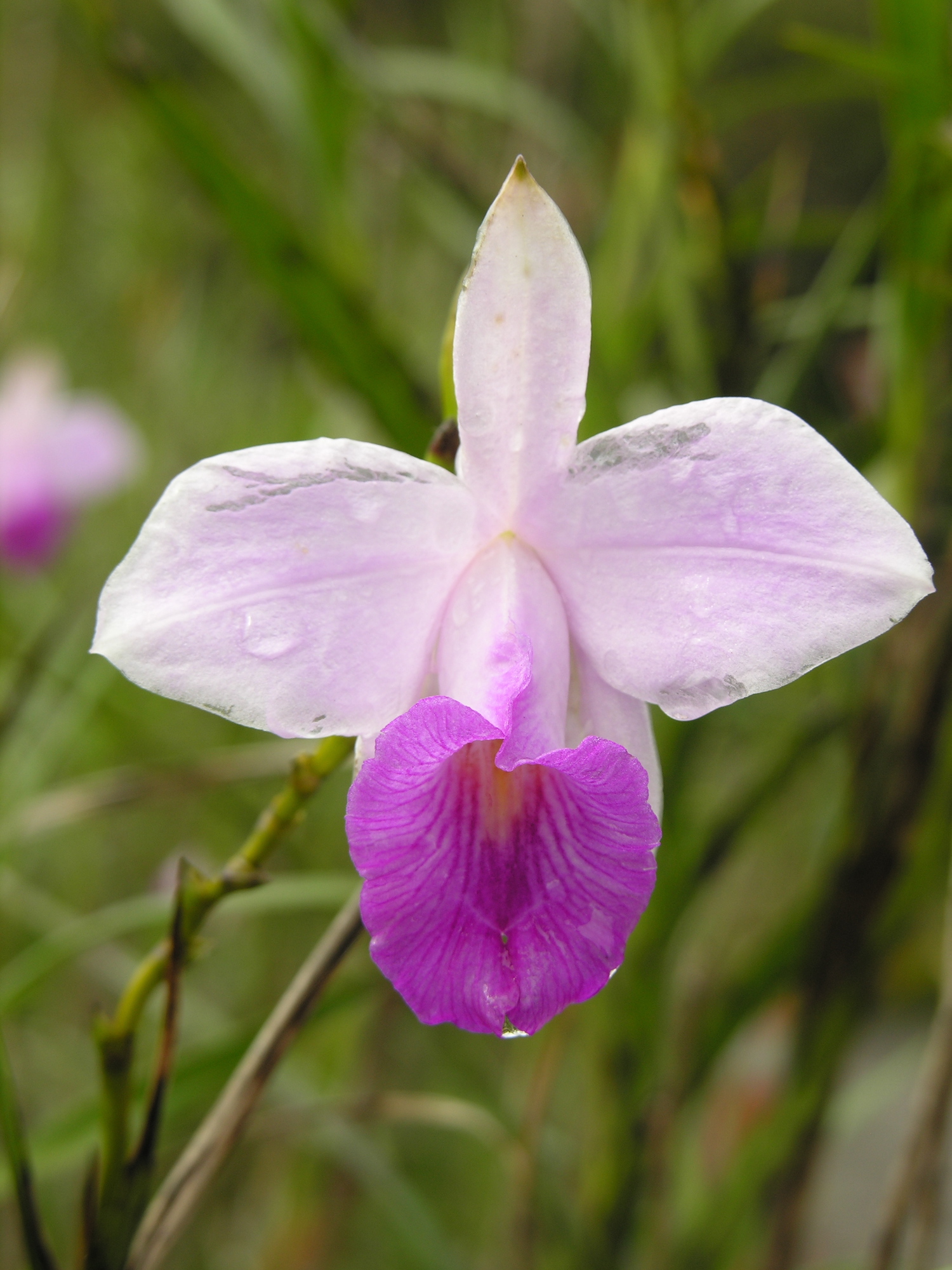
Roadside vegetation may occasionally provide unexpected orchid encounters. Sun-loving or disturbance-tolerant genera such as Arundina, Spathoglottis, Bromheadia, Dendrobium, Coelogyne, Appendicula, Agrostophyllum, Cymbidium and Phaius may occur along exposed banks, forest edges or secondary vegetation. Any botanical stops will depend upon safe parking and what is flowering.
We arrive in Tenom during the afternoon and check into our hotel.
Overnight: Hotel in Tenom.

ORCHIDS OF TENOM
Today we visit Sabah Agriculture Park, formerly known as the Tenom Orchid Centre and one of the most important cultivated plant collections in Borneo.
The park maintains at least 350 species of native orchids, including rare and threatened plants and several Bornean slipper orchids. It therefore offers a rare opportunity to see a broad representation of Sabah’s orchid flora together in one location.
Depending upon what is flowering, the collection may contain Paphiopedilum, Bulbophyllum, Dendrobium, Dendrochilum, Coelogyne, Phalaenopsis, Aerides, Arachnis, Renanthera, Vanda, Robiquetia, Thrixspermum, Trichoglottis, Cleisostoma, Pomatocalpa, Luisia, Thelasis, Oberonia, Appendicula, Agrostophyllum, Eria, Trichotosia, Ceratostylis, Flickingeria, Pholidota, Cymbidium, Grammatophyllum, Calanthe, Phaius, Spathoglottis, Arundina, Eulophia, Habenaria, Peristylus, Liparis, Crepidium, Goodyera, Anoectochilus and Macodes.
The collection also allows us to compare orchid growth forms and ecological strategies, from tiny epiphytes to huge i, terrestrial jewel orchids, pendulous Dendrobium, fan-shaped Paphiopedilum and monopodial orchids with long aerial roots.
The park maintains extensive collections of tropical crops, fruits and ornamental plants, as well as carnivorous Nepenthes. Native and cultivated pitcher plants may include species from lowland, montane and ultramafic habitats.
Subject to opening hours, we also visit the Murut Cultural Centre. Housed within an immense timber complex inspired by traditional village architecture, the centre presents the arts, artefacts and cultural heritage of Sabah’s Murut communities.
An optional visit to a local coffee producer provides an opportunity to sample Tenom’s celebrated coffee and learn about its cultivation and preparation.
Overnight: Hotel in Tenom.
THE PEAT SWAMP FOREST
This morning we board an early train from Tenom to Beaufort. The railway descends through the dramatic Padas Gorge and provides a fascinating journey through Sabah’s mountainous interior.
From Beaufort, we explore lowland habitats supporting a very different orchid flora from the cloudforests visited earlier in the expedition. In open or seasonally wet areas, possible orchids include Bromheadia, Arundina, Spathoglottis, Eulophia, Corymborkis, Tropidia, Nervilia, Goodyera, Zeuxine, Habenaria, Peristylus, Dendrobium, Bulbophyllum, Appendicula, Agrostophyllum and Thrixspermum.
We then continue to Klias Peat Swamp Forest. Peat swamp is one of Borneo’s most specialised and threatened habitats. Waterlogged, acidic soils create difficult growing conditions, yet support a distinctive community of orchids, palms, ferns, ant plants and carnivorous plants. Regional studies of Bornean peat swamps have documented more than 50 orchid species in at least 26 genera.
An extensive boardwalk allows us to penetrate the forest without disturbing the fragile peat surface. Possible orchid genera include Bulbophyllum, Dendrobium, Appendicula, Agrostophyllum, Eria, Ceratostylis, Oberonia, Thrixspermum, Trichoglottis, Cleisostoma, Pomatocalpa, Robiquetia, Thelasis, Podochilus, Flickingeria, Coelogyne, Pholidota, Liparis, Crepidium, Corymborkis, Tropidia, Goodyera, Zeuxine, Bromheadia and Spathoglottis.
The peat swamp also supports an exceptional assemblage of carnivorous pitcher plants. We search for Nepenthes gracilis, N. ampullaria, N. bicalcarata, N. mirabilis and the giant lowland species N. rafflesiana. These species often grow together but employ remarkably different trapping strategies.
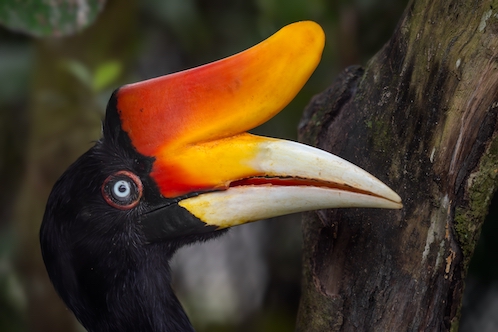
During the late afternoon, we continue to the Klias Wetlands for a sunset river cruise. Proboscis monkeys, long-tailed macaques, silvered langurs, monitor lizards and hornbills may be encountered among the riverside vegetation.
After landing for dinner, we return to the boats after dark. Thousands of fireflies sometimes gather in particular trees and coordinate their flashes, creating the impression of entire trees illuminated by rapidly blinking lights. This extraordinary natural spectacle provides a memorable conclusion to the day.
Overnight: Hotel near the Klias Wetlands.

RETURN TO KOTA KINABALU
Today we return to Kota Kinabalu, a journey of approximately two hours.
The programme is intentionally flexible. We may check into our hotel and enjoy a restful afternoon, undertake laundry and visit some of the city’s bookshops in search of orchid, botanical and natural-history publications.
Alternatively, we may depart the Klias region early and travel by ferry to Manukan Island. Located within Tunku Abdul Rahman Marine Park, Manukan offers sandy beaches, clear tropical waters and short forest trails. The afternoon may be spent swimming, snorkelling, relaxing or exploring the island’s coastal vegetation.
This evening we visit Kota Kinabalu’s celebrated seafood market. Stalls display an extraordinary selection of freshly landed fish, prawns, squid, cuttlefish, lobster, shellfish and crab. Guests can choose their seafood and have it cooked to order at the surrounding restaurants, creating one of the city’s most atmospheric culinary experiences.
Overnight: Hotel in Kota Kinabalu.

FLIGHT TO MULU
Today we travel to one of the most spectacular protected areas in Southeast Asia: Gunung Mulu National Park.
A UNESCO World Heritage Site, Mulu is internationally renowned for its immense cave systems, dramatic limestone mountains and pristine rainforest. Covering more than 500 square kilometres of protected wilderness, it safeguards one of the most remarkable karst landscapes on Earth.
Following our flight from Kota Kinabalu, we arrive in the heart of the national park and transfer to the beautiful Mulu Marriott Resort, situated beside the rainforest. After time to settle into our accommodation, we begin exploring the park via a network of elevated boardwalks that wind through primary rainforest towards one of Mulu’s most famous attractions: Deer Cave.
Deer Cave is among the largest cave passages in the world. The immense entrance and colossal chambers create an unforgettable first impression, whilst the cave itself supports millions of bats.
As sunset approaches, we gather outside the cave to witness one of the great wildlife spectacles of Southeast Asia. Each evening,
vast numbers of bats emerge from the cave in swirling columns that resemble dark ribbons of smoke, spiralling and twisting above the forest canopy before dispersing across the surrounding rainforest to feed. On favourable evenings, the spectacle can involve millions of
individuals and is widely regarded as one of the most extraordinary wildlife events in Borneo.
After darkness falls, we return through the rainforest to our resort. Along the boardwalks, there is often an opportunity to observe nocturnal insects, frogs and other rainforest creatures emerging for the night.
Overnight: Mulu Marriott Resort.

THE CAVES OF MULU
Today we explore the immense cave systems that have made Mulu famous throughout the world.
Over millions of years, rivers have carved an extraordinary labyrinth beneath the park’s limestone mountains. The result is one of the greatest known cave systems, containing immense chambers, underground rivers and spectacular mineral formations.
We travel by longboat towards Clearwater Cave, stopping to explore forest and limestone habitats along the way. Limestone supports a specialised orchid flora, and possible genera include Paphiopedilum, Bulbophyllum, Dendrobium, Eria, Ceratostylis, Appendicula, Agrostophyllum, Oberonia, Thrixspermum, Trichoglottis, Cleisostoma, Pomatocalpa, Luisia, Pholidota, Coelogyne, Liparis, Crepidium, Calanthe, Corymborkis and Tropidia.
With more than 230 kilometres of mapped passages, Clearwater ranks among the longest cave systems on Earth. Walkways lead into enormous chambers decorated with stalactites, stalagmites and formations created over countless millennia.
Crystal-clear water flows through much of the system and emerges beside beautiful rainforest pools. The surrounding forest provides further opportunities to search for orchids, aroids, palms, begonias and ferns.
We also visit neighbouring cave systems and learn about Mulu’s geology, ecology and exploration history. During the afternoon, we explore additional rainforest boardwalks and limestone outcrops surrounding the park headquarters.
Dinner is served at the resort.
Overnight: Mulu Marriott Resort.

PAPHIOPEDILUM SANDERIANUM
Today offers the opportunity to search for one of the rarest and most celebrated orchids in the world: Paphiopedilum sanderianum. Endemic to the Gunung Mulu region, this extraordinary slipper orchid grows naturally in wet tropical limestone habitats. It is famous for producing elongated, twisting petals that may hang far below the pouch-shaped flower. Its highly restricted distribution and history of overcollection make surviving wild populations exceptionally important.
We travel by boat into a remote valley where limestone cliffs rise above the surrounding rainforest. Here, with the assistance of local guides, we search for Paphiopedilum sanderianum growing naturally on steep, mossy limestone walls. Flowering can never be guaranteed, but observing the plants in their natural habitat is itself a privileged experience.
The valley supports many other orchids. Possible genera include Bulbophyllum, Dendrobium, Eria, Ceratostylis, Appendicula, Agrostophyllum, Oberonia, Thrixspermum, Trichoglottis, Cleisostoma, Pomatocalpa, Robiquetia, Luisia, Thelasis, Podochilus, Pholidota, Coelogyne, Liparis, Crepidium, Calanthe, Corymborkis and Tropidia. We also search the limestone for specialised ferns, begonias, aroids and other calcicolous plants.
Later, we visit a lowland forest site near Mulu Airport. This accessible habitat contains orchids, palms, ferns and several carnivorous plants. Orchid genera may include Bulbophyllum, Dendrobium, Appendicula, Agrostophyllum, Eria, Ceratostylis, Oberonia, Thrixspermum, Trichoglottis, Cleisostoma, Pomatocalpa, Robiquetia, Thelasis, Podochilus, Corymborkis, Tropidia, Goodyera and Zeuxine.
Pitcher plants at the site may include Nepenthes ampullaria, N. hemsleyana and N. bicalcarata.
Dinner is served at the resort.
Overnight: Mulu Marriott Resort.
RETURN TO KOTA KINABALU
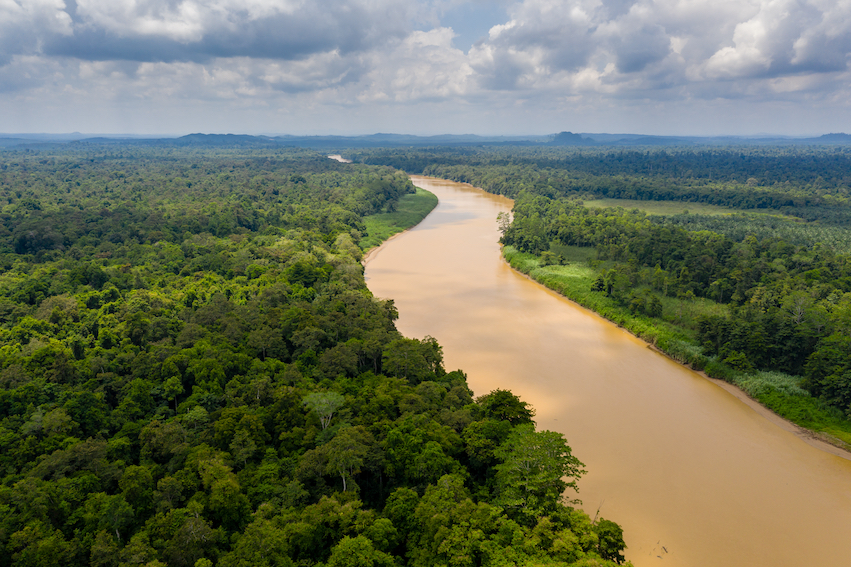
After breakfast, we transfer to Mulu Airport for our return flight to Kota Kinabalu. Flying across northern Borneo provides a final opportunity to appreciate the immense forests, mountains and river systems explored during the expedition.
Over the past fourteen days, we have encountered orchids across an exceptional variety of habitats: cultivated conservation collections, lowland rainforest, peat swamp, limestone karst, lower montane forest and moss-covered summit cloudforest. We have searched for tiny Corybas hidden among leaf litter, epiphytic Bulbophyllum and Dendrochilum clinging to cloudforest branches, jewel orchids carpeting the forest floor and the extraordinary Paphiopedilum sanderianum growing on the limestone walls of Mulu.
Upon arrival in Kota Kinabalu, we transfer participants to the airport or their chosen hotel, marking the conclusion of our Borneo orchid expedition.
Ready for the adventure of a lifetime?
Join us in Borneo and discover one of the world’s richest orchid floras amidst spectacular rainforests, cloudforests and limestone mountains.



BESPOKE PRIVATE TOURS
If you prefer not to join a group tour, we can tailor a private trip to match your dates and interests. Please email us for more details.