
Borneo
Indonesia
$4,450
Switch CurrencyDuring this expedition, we explore the cloudforests of Mount Kinabalu, search for rare orchids and carnivorous pitcher plants, venture into the immense cave systems of Mulu National Park, cruise wildlife-rich rainforest rivers and visit a tropical island where endangered sea turtles come ashore to nest.
BrochureStart Point
Monday, July 26th, 2027
Kota Kinabalu
End Point
Friday, August 6th, 2027
Kota Kinabalu
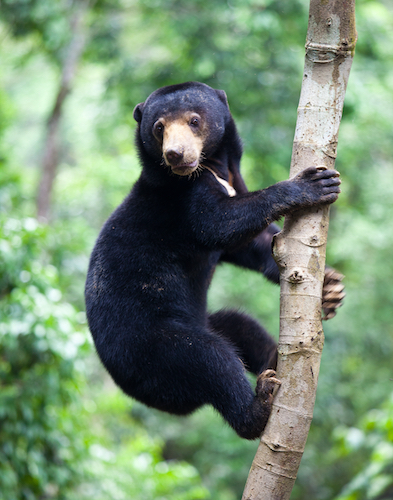
Sun Bear

Pitcher Plant

Silvered Leaf Monkey

About Borneo
Borneo is one of the world’s greatest natural history destinations and one of the finest wildlife destinations in Asia. Throughout this expedition, we search for many of the island’s most iconic species.
Home to some of the world’s most ancient tropical rainforests, this vast island supports extraordinary wildlife and flora. Orangutans move through the canopy, pygmy elephants roam beside jungle rivers, hornbills soar overhead and giant Rafflesia flowers bloom on the forest floor.
Getting There
Fly to Kota Kinabalu, Sabah (BKI). We recommend flying to Singapore or Kuala Lumpur (both are major hub cities). From those cities, there are several daily flights with Malaysia Airlines, MASwings, Singapore Airlines and other carriers.
We recommend arriving one day before the expedition begins so you can rest and recover from international flights.
Getting Away
The expedition ends in Sandakan, Sabah (SDK). Malaysia Airlines, MASwings and Singapore Airlines offer several daily flights from Sandakan back to Kota Kinabalu (and sometimes direct to Kuala Lumpur and Singapore).
We recommend booking departing flights one day after the expedition ends to have a little buffer time and decompress before heading home.
Included
- All accommodation throughout the itinerary (shared twin or double room)
- All meals and non-alcoholic drinks
- Expert expedition team and professional guides
- All ground transport and other travel logistics as per the itinerary
- All internal flights, vehicle transfers and boat trips during the itinerary
- All permits, permissions and entry fees
- Basic medical kit and satellite, radio or emergency phone
- Daily expedition briefings and recaps during the itinerary
Not Included
- International flights to the start point and from the end point
- Travel insurance
- Passport and travel documents (e.g. visa, if required for your nationality)
- Pre- and Post-expedition accommodation
- Tips and gratuities (optional)
- Alcoholic beverages
- Souvenirs
- Personal expenses
- Optional single room upgrade
Itinerary
From the cloudforests of Mount Kinabalu to the giant caves of Mulu, from wildlife-rich rainforest rivers to turtle nesting beaches, this expedition showcases the astonishing natural diversity of Malaysian Borneo.
Prefer different dates? We can organise a private, bespoke trip to fit your schedule and preferences
Extend Your Journey
Extend your journey with a relaxing stay on one of Sabah’s spectacular tropical islands—the perfect finale to your Borneo expedition. Contact us for more information: sales@redfernadventures.com.

ARRIVE AT KINABALU PARK
Our expedition begins with pick up from your hotel in Kota Kinabalu, the capital of Sabah. We then journey inland towards one of Southeast Asia’s most spectacular natural landmarks: Mount Kinabalu.
Rising 4,095 metres above sea level, Mount Kinabalu is the highest mountain in Malaysia and the highest peak between the Himalayas and New Guinea.
The mountain is internationally recognised as one of the world’s great biodiversity hotspots. Its slopes support an extraordinary variety of habitats and an astonishing concentration of endemic species, many of which occur nowhere else on Earth.
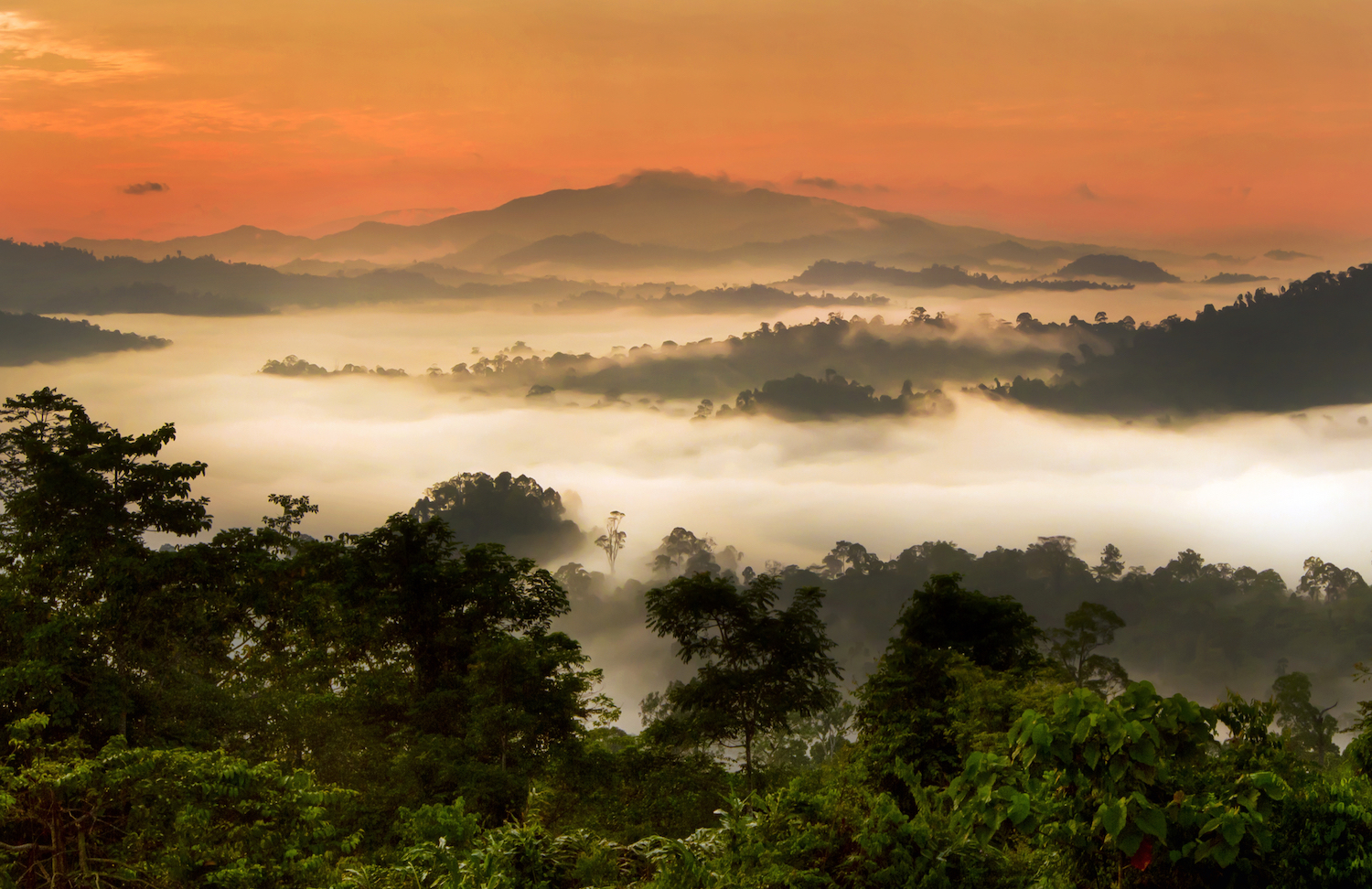
Travelling through the foothills of the Crocker Range, we make several stops at viewpoints that offer magnificent panoramas across Sabah’s mountainous interior. On clear days, the immense granite summit of Mount Kinabalu dominates the
landscape, rising dramatically above a sea of rainforest-covered ridges.
Upon reaching Kinabalu Park Headquarters, we spend the afternoon exploring some of the park’s celebrated cloudforest trails. These cool montane forests are very different from the lowland rainforests found elsewhere in Borneo. Moss-covered trees, orchids, tree ferns and epiphytes cloak the forest, creating an enchanting atmosphere reminiscent of a lost world.
We also visit the renowned Kinabalu Botanic Garden. Established to showcase the exceptional plant diversity of the mountain, the gardens contain hundreds of species of orchids, carnivorous pitcher plants, ferns and flowering plants. The park itself supports more than 5,000 plant species, making it one of the richest botanical regions in Asia.
Birdwatchers may encounter colourful endemic species, while squirrels and treeshrews are frequently seen along the forest trails.
As evening approaches, we check into our comfortable mountain chalets within the national park. Surrounded by ancient rainforest and cooled by mountain air, this provides a wonderful introduction to the natural wonders of Borneo.
Overnight: Kinabalu Park Chalets.
EXPLORE PORING SPRINGS
Today is dedicated to exploring the remarkable natural attractions surrounding Poring Springs, one of Sabah’s most famous rainforest destinations.
Located on the lower slopes of Mount Kinabalu, Poring lies within a region of extraordinary biodiversity and offers access to a fascinating variety of wildlife, plants and rainforest habitats. The day’s activities are intentionally flexible, allowing guests to choose from a wide range of options according to their interests.
One of the highlights is the opportunity to search for the world’s largest flowers. Several nearby reserves protect populations of Rafflesia keithii, one of Borneo’s giant parasitic blooms. Individual flowers can exceed 80 centimetres in diameter and rank amongst the largest flowers found anywhere on Earth. Because flowering is unpredictable, sightings can never be guaranteed, but whenever blooms are present they represent one of the most remarkable botanical spectacles in Asia.
For those interested in rainforest ecology, the famous canopy walkway provides a unique perspective high above the forest floor. Suspended amongst the treetops, the walkway offers excellent opportunities to appreciate the complexity of the rainforest canopy and often provides sightings of birds, squirrels and other wildlife.
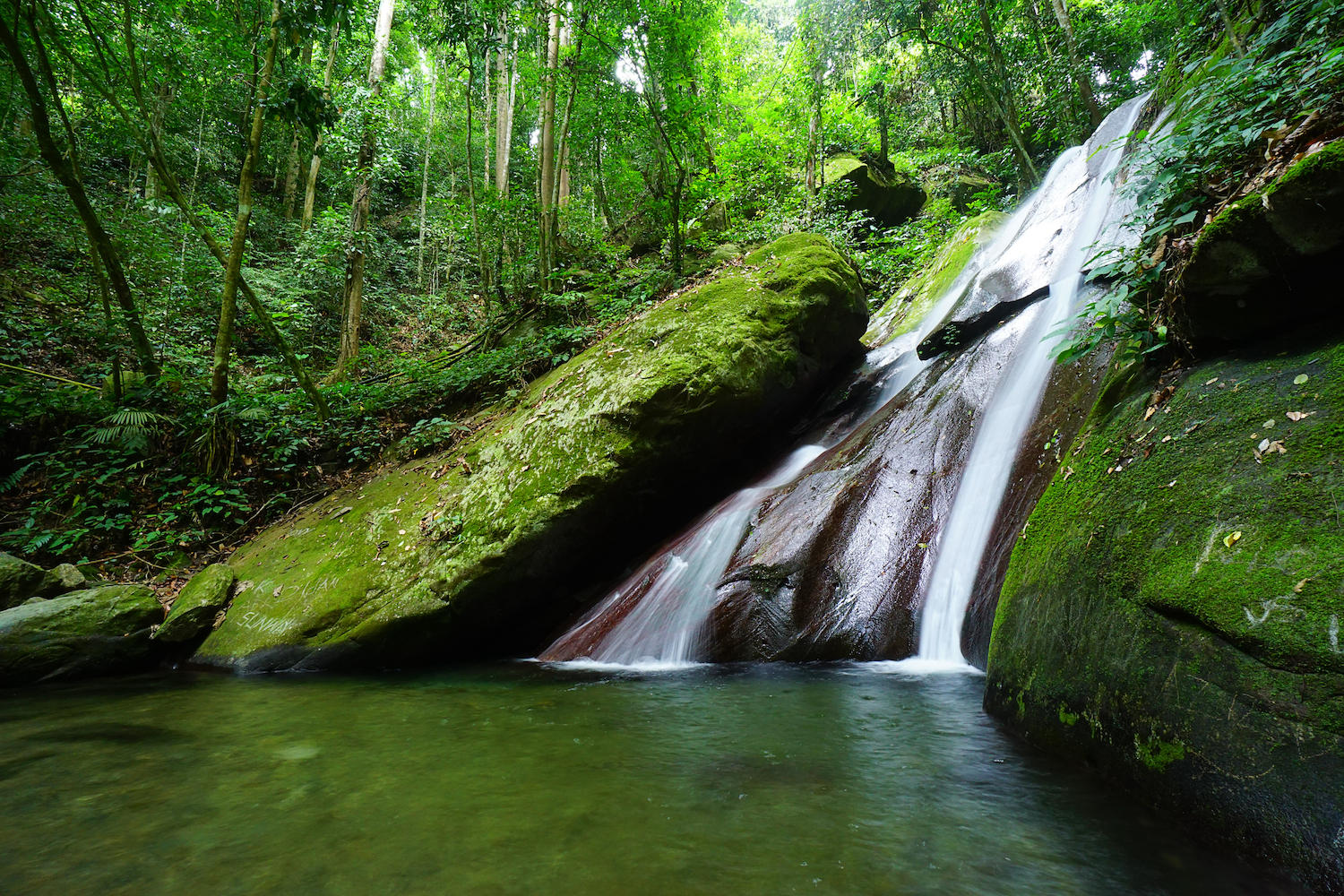
Several beautiful waterfalls can also be visited. Adventurous participants may choose to undertake the rewarding trek to Langanan Falls, while shorter walks lead to the attractive Kipungit Falls. Both routes pass through lush rainforest rich in ferns, orchids and tropical vegetation.
The orchid gardens and butterfly centre provide opportunities to discover some of Borneo’s extraordinary invertebrate and plant diversity. Meanwhile, the nearby Kundasang War Memorial combines a poignant historical site with beautifully maintained gardens that frequently contain flowering orchids and ornamental plants.
Food lovers may wish to visit the famous Kundasang Fruit Market, where stalls display a colourful array of tropical fruits. Depending upon the season, visitors may have the opportunity to sample durian, mangosteen, rambutan, dragon fruit, snake fruit and many other local delicacies.
At the end of the day there is time to relax in the geothermal pools that give Poring Springs its name. Fed by naturally heated underground waters, these pools have attracted visitors for generations and provide a relaxing conclusion to a day of exploration.
Overnight: Kinabalu Park Chalets.

GUNUNG ALAB
Today we travel to Gunung Alab, one of the finest places in Sabah to search for orchids, carnivorous pitcher plants and moss-covered cloudforests. The result is one of the most beautiful botanical destinations in Malaysian Borneo.
Our first objective is a search for another of Borneo’s giant flowers. The Rafflesia Information Centre occasionally hosts blooms of Rafflesia pricei, a species distinct from the giant flowers seen around Poring Springs. Encountering two different species of Rafflesia during a single expedition provides a fascinating insight into one of the world’s most unusual plant groups.
We then continue higher into the cloudforest, where several excellent trails allow us to explore this remarkable habitat. Boardwalks pass through forests draped in mosses, lichens and epiphytes. Carnivorous pitcher plants frequently grow beside the trails, whilst orchids cling to branches overhead. The cool mountain environment supports many species that are absent from the lowlands, creating an entirely different ecological community from those encountered earlier in the expedition. Birdlife can be particularly rewarding, with several endemic species occurring within the Crocker Range.
Lunch is enjoyed in Ranau, where we sample traditional Malaysian rotis and other local specialities before beginning our return journey to Kota Kinabalu. Upon arrival in the city, we check into our hotel and enjoy a relaxing evening before continuing to Sarawak tomorrow.
Overnight: Cititel, Kota Kinabalu, or similar.

FLIGHT TO MULU
Today we travel to one of the most spectacular protected areas in Southeast Asia: Gunung Mulu National Park.
A UNESCO World Heritage Site, Mulu is internationally renowned for its immense cave systems, dramatic limestone mountains and pristine rainforest. Covering more than 500 square kilometres of protected wilderness, it safeguards one of the most remarkable karst landscapes on Earth.
Following our flight from Kota Kinabalu, we arrive in the heart of the national park and transfer to the beautiful Mulu Marriott Resort, situated beside the rainforest.
After time to settle into our accommodation, we begin exploring the park via a network of elevated boardwalks that wind through primary rainforest towards one of Mulu’s most famous attractions: Deer Cave. Deer Cave is among the largest cave passages in the world. The immense entrance and colossal chambers create an unforgettable first impression, whilst the cave itself supports millions of bats.
As sunset approaches, we gather outside the cave to witness one of the great wildlife spectacles of Southeast Asia. Each evening, vast numbers of bats emerge from the cave in swirling columns that resemble dark ribbons of smoke, spiralling and twisting above the forest canopy before dispersing across the surrounding rainforest to feed. On favourable evenings, the spectacle can involve millions of individuals and is widely regarded as one of the most extraordinary wildlife events in Borneo.
After darkness falls, we return through the rainforest to our resort. Along the boardwalks, there is often an opportunity to observe nocturnal insects, frogs and other rainforest creatures emerging for the night.
Overnight: Mulu Marriott Resort.

THE CAVES OF MULU
Today we explore the immense cave systems that have made Mulu famous throughout the world.
Over millions of years, rivers have carved an extraordinary labyrinth beneath the limestone mountains of the national park. The result is one of the largest cave systems ever discovered, containing vast chambers, underground rivers and spectacular formations.
Our first destination is Clearwater Cave. With more than 230 kilometres of mapped passages, it ranks amongst the longest cave systems on Earth. Wooden walkways and well-maintained paths allow us to penetrate deep into this subterranean world, where enormous chambers are decorated with stalactites, stalagmites and intricate limestone formations created over countless millennia.
Crystal-clear water flows through much of the cave system, giving Clearwater Cave its name. Emerging from the cave, the river forms beautiful pools surrounded by rainforest, providing an idyllic setting in which to relax and appreciate the surrounding landscape.
We also visit several neighbouring cave systems that showcase the astonishing diversity of Mulu’s underground world. Throughout the day, our local guides explain the geology, ecology and exploration history of these remarkable caves.
In the afternoon, we return to Deer Cave for a more detailed exploration of its immense interior. The cave contains one of the largest cave passages on Earth, large enough to accommodate several cathedrals placed side by side. Millions of bats and swiftlets inhabit the cave, creating a unique ecosystem sustained by nutrients carried in from the surrounding rainforest.
Returning to the surface, we spend the remainder of the afternoon exploring rainforest boardwalks and limestone outcrops surrounding the park headquarters.
Dinner is served at the resort.
Overnight: Mulu Marriott Resort.

RETURN TO KOTA KINABALU
After breakfast, we transfer to the airport for our return flight to Kota Kinabalu.
Flying across the vast forests of northern Borneo provides a striking reminder of the immense landscapes we have explored during the previous days. Upon arrival, we transfer into the city and enjoy lunch.
The remainder of the afternoon is free to relax at the hotel, explore the waterfront or enjoy some last-minute shopping.
This evening we experience one of Kota Kinabalu’s most famous culinary attractions: the bustling seafood market located beside the harbour.
Visitors are able to select directly from an astonishing array of freshly landed seafood, including reef fish, prawns, squid, cuttlefish, lobster and crab. The atmosphere is lively and distinctly local, with stalls displaying their daily catches whilst nearby restaurants prepare meals to order. For many visitors, this becomes one of the culinary highlights of the entire expedition.
After dinner, we return to our hotel and prepare for tomorrow’s journey to the wildlife-rich forests of eastern Sabah.
Overnight: Cititel, Kota Kinabalu, or similar.

TO THE KINABATANGAN RIVER
This morning we fly east across Sabah to Sandakan, gateway to one of the greatest wildlife destinations in Southeast Asia.
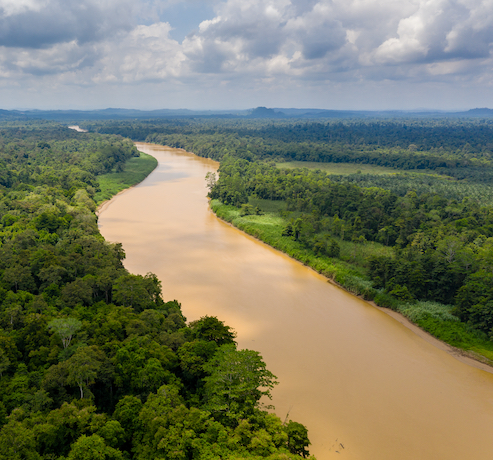
The Kinabatangan River is Sabah’s longest river, flowing for more than 560 kilometres through a mosaic of rainforest, oxbow lakes, freshwater swamps and floodplain forest. Although much of Borneo’s lowland rainforest has disappeared elsewhere, the Kinabatangan remains one of the island’s most important wildlife refuges and supports an extraordinary concentration of mammals, birds and reptiles.
Upon arrival in Sandakan, we transfer by road to Bilit Adventure Lodge, beautifully situated on the banks of the river itself. The journey offers our first glimpse of the landscapes that support some of Borneo’s most iconic wildlife.
After lunch and time to settle into our accommodation, we embark on our first river safari.
The late afternoon is one of the best times to explore the Kinabatangan. As temperatures begin to cool, wildlife becomes increasingly active along the riverbanks. Macaques, monitor lizards and kingfishers are frequently encountered, whilst hornbills often glide overhead in search of fruiting trees.
One of the highlights of the Kinabatangan is the possibility of encountering Bornean pygmy elephants. These gentle animals are found only in northern Borneo and represent the smallest form of Asian elephant. Although sightings can never be guaranteed, the Kinabatangan provides one of the best opportunities anywhere to encounter them in the wild.
As sunset colours spread across the river, we return to the lodge for dinner.
The sounds of the rainforest accompany us throughout the evening, creating a memorable introduction to one of Borneo’s most important wildlife sanctuaries.
Overnight: Bilit Adventure Lodge.

RIVER WILDLIFE SAFARIS
Today is devoted entirely to exploring the extraordinary wildlife of the Kinabatangan River. Before sunrise, we board our boats for an early morning river safari. Dawn is one of the most rewarding periods of the day, as many animals become active before the heat of the tropical afternoon.
The riverbanks come alive with birdlife. Stork-billed kingfishers, egrets, herons and hornbills are frequently observed, whilst troops of long-tailed macaques and pig-tailed macaques forage amongst the riverside vegetation.
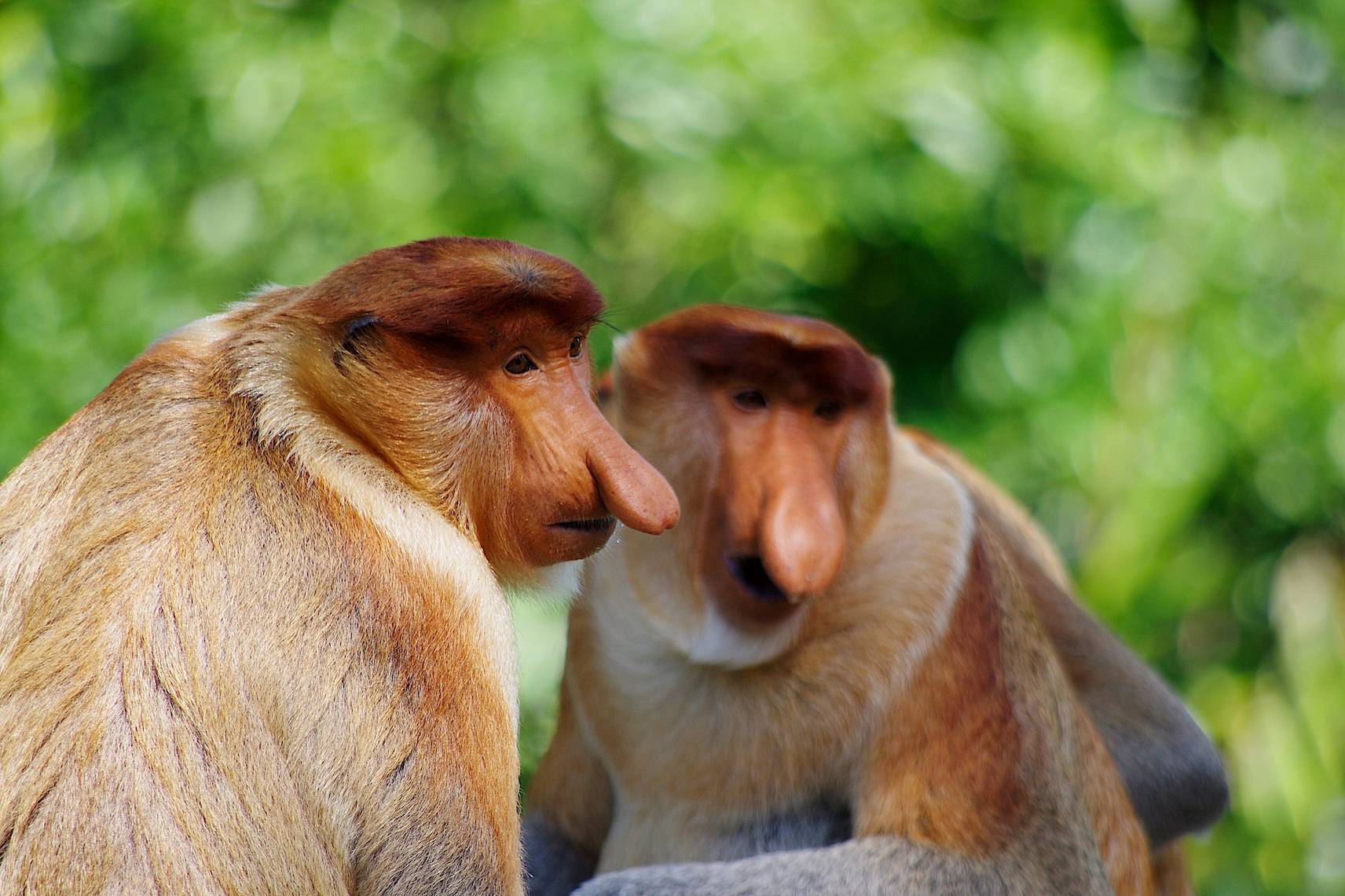
The Kinabatangan is particularly famous for its primates. Several species occur here, including silver langurs, red leaf monkeys and the remarkable proboscis monkey. Found only on Borneo, proboscis monkeys are famous for their unusual appearance and are among the most sought-after wildlife sightings in Sabah. Following breakfast back at the lodge, there is time to relax and enjoy the rainforest surroundings.
During the afternoon, we undertake a guided rainforest walk through nearby forest trails. Exploring on foot allows us to appreciate many aspects of the rainforest that are easily overlooked from a boat. Towering trees, strangler figs, orchids, fungi and countless insects reveal the extraordinary complexity of one of the oldest rainforest ecosystems on Earth.
As evening approaches, we return to the river for another wildlife cruise. Every journey along the Kinabatangan is different.
Crocodiles bask on muddy banks, hornbills fly between feeding trees and monkeys gather in riverside vegetation to spend the night. With luck, we may once again encounter pygmy elephants moving through the floodplain forest.
Returning to the lodge after sunset, we enjoy dinner while reflecting on another remarkable day in the rainforest.
Overnight: Bilit Adventure Lodge.
ORANGUTANS AND SUN BEARS
We begin the day with a final sunrise cruise along the Kinabatangan River.
The soft morning light creates excellent conditions for photography, whilst wildlife is often particularly active during the cooler hours of the day. This final river safari provides one last opportunity to search for hornbills, crocodiles, monkeys and, perhaps, the elusive Bornean pygmy elephant.
Following breakfast, we depart the Kinabatangan and continue our journey to encounter some of Borneo’s most iconic wildlife.
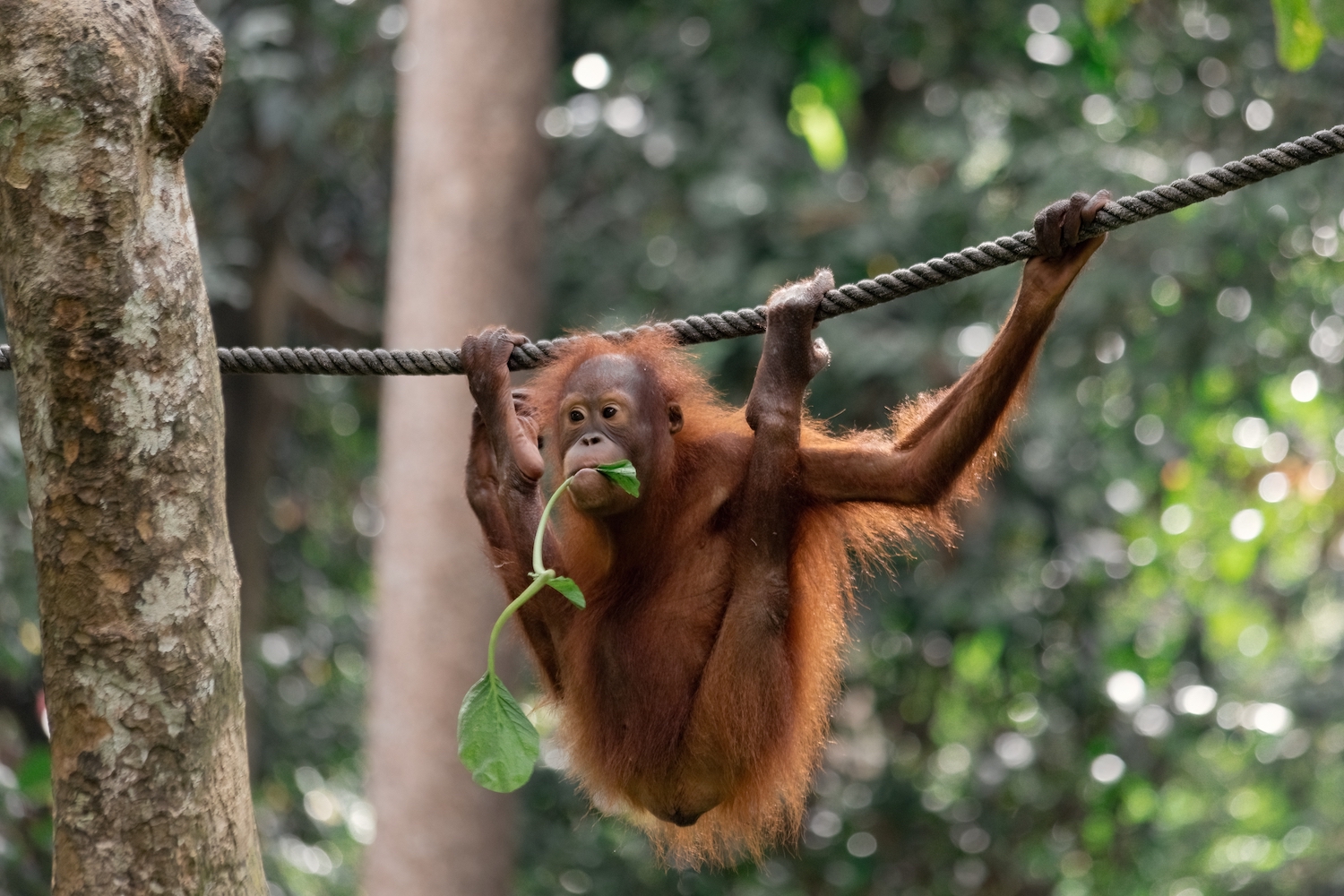
Our first destination is the world-famous Sepilok Orangutan Rehabilitation Centre. Established in 1964, Sepilok has become one of the world’s best-known orangutan conservation programmes and has helped rehabilitate hundreds of orphaned and displaced animals.
A short introductory presentation explains the challenges facing wild orangutans and the important work undertaken by the centre. We then follow elevated boardwalks through the rainforest to viewing areas where rehabilitating orangutans frequently emerge from the surrounding forest.
Watching these intelligent great apes move effortlessly through the trees is one of the defining experiences of any visit to Borneo. Sharing approximately 97% of our DNA, orangutans display an extraordinary range of behaviours and provide a fascinating insight into the lives of our great ape relatives.
After lunch, we visit the nearby Bornean Sun Bear Conservation Centre. Sun bears are the smallest bears on Earth, yet remain among the least known. The conservation centre provides refuge for rescued animals and plays an important role in conservation, research and public education. Elevated walkways provide excellent opportunities to observe the bears as they forage, climb and explore their large forest enclosures. We often also encounter long-tailed and pig-
tailed macaques here, and occasionally even hybrids between the two species.
As evening approaches, we visit the Rainforest Discovery Centre. This reserve protects an important tract of lowland rainforest and features an extensive canopy walkway system. As daylight fades, birds return to roost whilst squirrels and macaques make their final movements through the forest.
At sunset, we search for one of Sepilok’s most remarkable inhabitants: the red giant flying squirrel. These spectacular animals emerge from their daytime refuges high in the trees before launching themselves into the air, spreading their broad gliding membranes and soaring silently between trees through the forest canopy. Watching one glide across the rainforest in the fading evening light is a truly unforgettable sight.
Overnight: Sepilok Jungle Lodge.

LANKAYAN ISLAND
This morning, we transfer to Sandakan Harbour and board a boat for the journey to spectacular Lankayan Island. Surrounded by clear turquoise waters and vibrant coral reefs, Lankayan provides a striking contrast to the rainforests and rivers explored during the previous days. Located in the Sulu Sea, the island lies within a protected marine conservation area and is widely regarded as one of the finest island destinations in Malaysian Borneo.
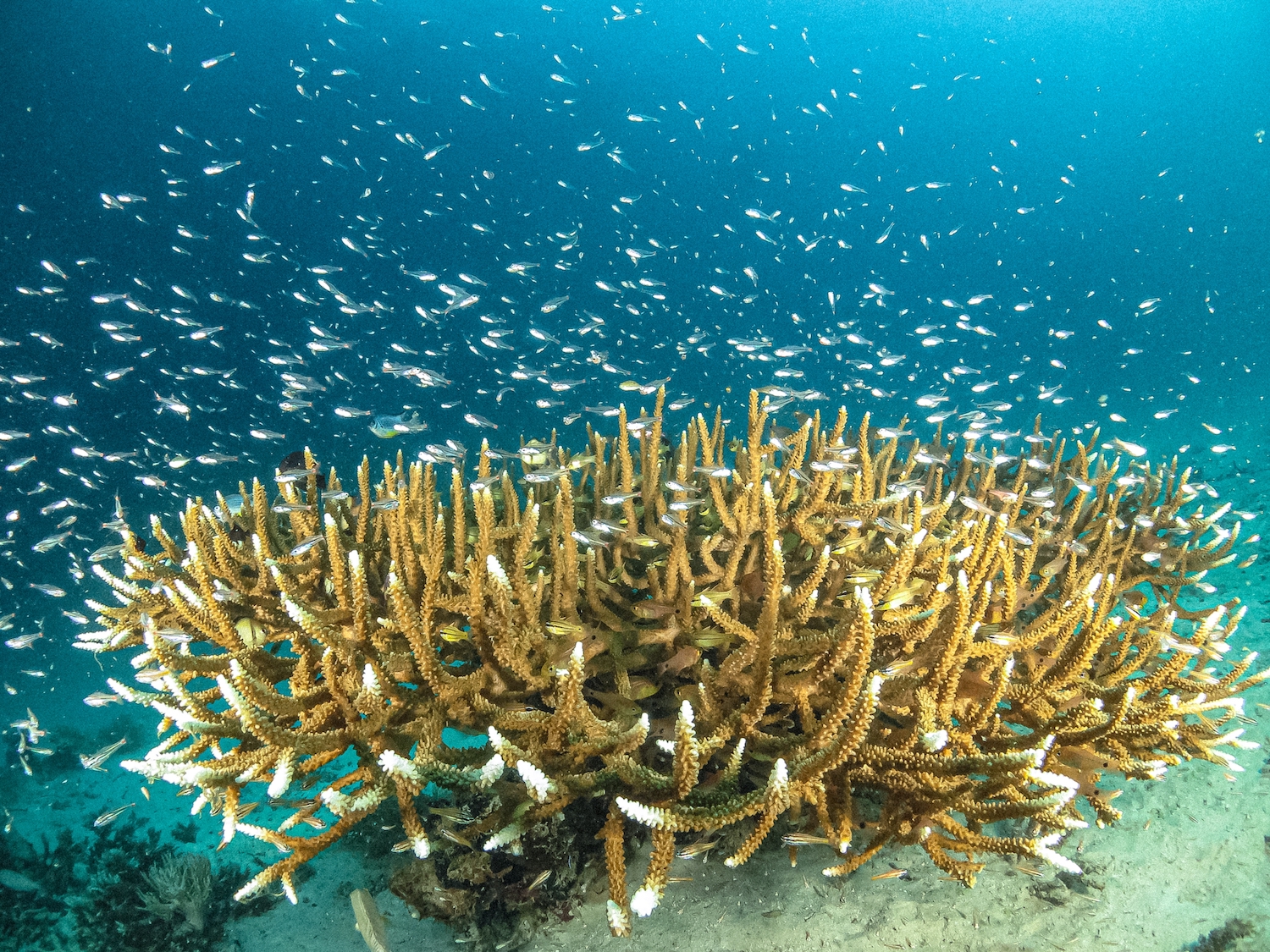
Upon arrival, we check into Lankayan Island Resort and enjoy lunch overlooking the sea. The remainder of the afternoon is free to relax on the pristine white-sand beach, swim in the warm tropical waters, or participate in optional snorkelling and diving excursions (at extra cost). The coral reefs surrounding the island support an impressive diversity of marine life, including colourful reef fish, sea turtles and a remarkable variety of corals.
As evening falls, our attention turns to one of Lankayan’s most celebrated natural spectacles. The island is an important nesting site for both green turtles and hawksbill turtles. Throughout much of the year, adult females emerge from the sea after dark and slowly make their way up the beach in search of suitable nesting sites.
Under the supervision of local conservation staff, we may have the opportunity to observe this remarkable process. Watching a turtle excavate her nest and lay her eggs beneath a tropical night sky is an extraordinary wildlife experience and one that few people ever forget.
Overnight: Lankayan Island Resort.
Note: Turtle sightings cannot be guaranteed. However, we have a second opportunity tomorrow evening, increasing our chances of witnessing nesting activity during our stay.
TURTLES AND CORAL REEFS
This morning, we may have the opportunity to witness another extraordinary wildlife event. Depending upon recent nesting activity, conservation staff may release newly hatched turtles onto the beach. Tiny hatchlings make their way towards the ocean, beginning one of the most remarkable journeys in the animal kingdom. Only a small fraction will survive to adulthood, making every successful release a reminder of the importance of marine conservation.
Note: Turtle hatchling releases may take place in the morning or evening, depending upon recent hatching activity and the advice of the conservation team. During our stay, we will receive an update from the conservation staff regarding whether hatchlings are present and, if so, when any releases are expected to take place.
The remainder of the day is free to relax and enjoy this beautiful tropical island. Options include exploring the island’s forest trails, relaxing on the white-sand beaches, swimming in the warm, shallow waters, or joining optional snorkelling and diving excursions (at extra cost). This evening, we have a second opportunity to watch for nesting green and hawksbill turtles, providing another chance to witness this remarkable spectacle if no turtles appeared the previous night.
Overnight: Lankayan Island Resort.
Accommodation & Diving Note: As standard, we stay in beachside chalets at Lankayan Island Resort.
The resort also offers dedicated dive packages that combine accommodation in water chalets with diving excursions. For participants wishing to undertake several dives during their stay, upgrading to one of these packages may represent better value than arranging individual dives separately. Please contact the Redfern Adventures team to discuss the available options.

PROBOSCIS MONKEYS
After breakfast, we bid farewell to Lankayan Island and return by boat to Sandakan.
During the journey, there may be opportunities to observe seabirds and, occasionally, marine wildlife in the surrounding waters.
Upon arrival in Sandakan, we continue north towards Labuk Bay.
Situated within a coastal mangrove ecosystem, Labuk Bay has become one of the best places in Borneo to observe proboscis monkeys at close range. The
reserve protects important habitat for these highly specialised primates and provides exceptional opportunities to watch them in their natural surroundings.
Proboscis monkeys are among the world’s most unusual primates. Adult males can weigh more than 20 kilograms and possess the enormous pendulous noses for which the species is famous. These remarkable animals are endemic to Borneo and found nowhere else on Earth.
From the viewing platforms, we can observe the fascinating social interactions between different family groups whilst learning more about the ecology of the species and the conservation challenges it faces.
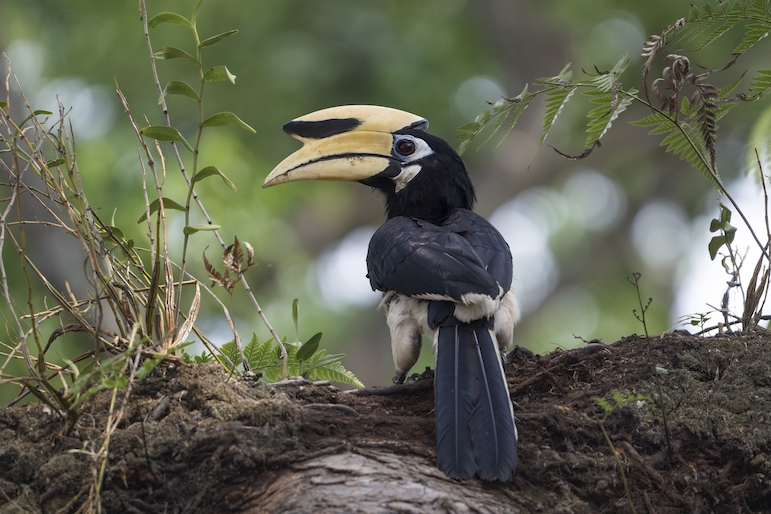
Silvered leaf monkeys are also frequently encountered, whilst oriental pied hornbills and other birdlife are often seen around the reserve.
We spend several hours enjoying the wildlife of Labuk Bay before lunch and our return transfer to Sandakan. We then provide drop-off at Sandakan Airport or your hotel, bringing our remarkable Borneo expedition to a close.
We depart with memories of orangutans, hornbills, pygmy elephants, giant flowers, rainforest rivers, ancient caves and tropical seas—experiences that will remain with us long after the expedition has ended.
CORAL ISLANDS
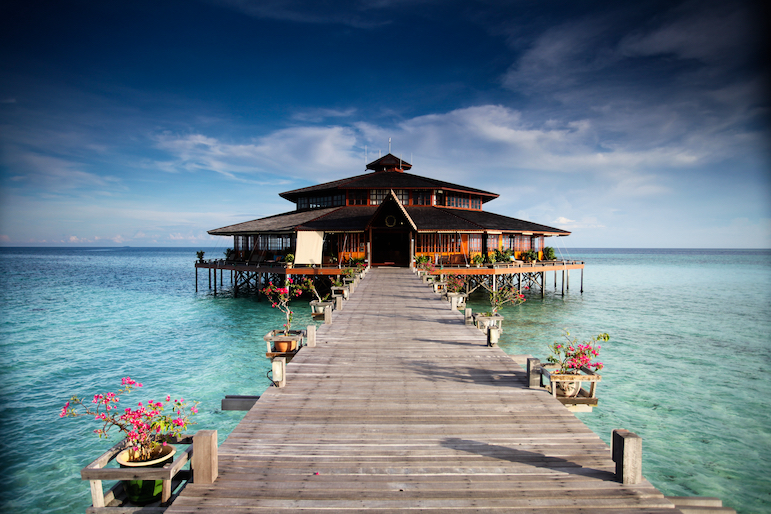
Extend your journey with a relaxing stay on one of Sabah’s spectacular tropical islands — the perfect finale to your Borneo expedition.
Scattered across the warm, turquoise waters off Sabah’s east coast, these idyllic islands offer white-sand beaches, tropical seas and colourful coral reefs, with opportunities for snorkelling, scuba diving, wildlife encounters or simply relaxing after the adventure of the main expedition.
As our itinerary concludes in Sandakan, it is easy to extend your stay and explore some of the islands lying offshore. Several options are available, allowing you to choose an extension that best suits your interests and the amount of time you have available.
SELINGAN ISLAND & THE TURTLE ISLANDS
Our principal recommendation is Selingan Island, part of the protected Turtle Islands Park approximately 40 kilometres north of Sandakan.
Surrounded by the tropical waters of the Sulu Sea, Selingan combines beautiful beaches and coral reefs with one of Sabah’s most memorable wildlife experiences. Green
and hawksbill turtles nest within the Turtle Islands throughout the year, and an overnight stay provides the opportunity to experience the island’s renowned turtle conservation programme.
During the day, there is time to relax on the beach and snorkel in the surrounding waters, before joining the evening conservation activities and learning about the remarkable efforts being made to protect Sabah’s nesting sea turtles.
OTHER OPTIONS
A number of other island extensions can also be arranged from Sandakan, depending upon your interests, available time and preferred activities.
For those particularly interested in snorkelling and scuba diving, additional stays can be arranged at specialist island and dive resorts, providing more time to explore Sabah’s coral reefs and extraordinary marine biodiversity.
Participants may also choose to return to Lankayan Island after the main expedition. Lankayan offers excellent snorkelling and diving, abundant marine life and a wonderfully peaceful setting, making it an ideal choice for anyone wishing to spend additional days enjoying the island and its surrounding reefs.
Whether you are looking for turtles and wildlife, spectacular coral reefs, scuba diving or simply a few relaxing days beside the sea, we can help arrange an island extension to complete your time in Borneo.
Please email sales@redfernadventures.com for options and pricing.
READY FOR THE ADVENTURE OF A LIFETIME?
Join us in Borneo and encounter orangutans, rainforests and some of the world’s most spectacular wildlife.


BESPOKE PRIVATE TOURS
If you prefer not to join a group tour, we can tailor a private trip to match your dates and interests. Please email us for more details.